Tokyo can be a deeply rewarding city for dining with dietary requirements, but the most confident meals begin before you sit down. The goal is not to make a restaurant guess. It is to give it the time and detail needed to answer honestly.
This guide is designed for travelers who want to plan carefully and kindly. It helps you distinguish a preference from a safety-critical need, ask the useful questions before a reservation is made, and recognise when a different restaurant is the better choice. NipponMe can assist with communicating a request, while the restaurant remains the only party that can confirm its menu and service approach.
After clarifying what must be communicated, continue with the restaurant reservations guide and the Tokyo dining guide to choose a suitable setting and make the request early.
1. Why early planning matters
Many Japanese dishes have layers that are not obvious from the name: fish-based stock, soy sauce, mirin, butter, sesame, wheat, egg, or an ingredient prepared in the same kitchen. A restaurant may be able to adjust, may need substantial advance notice, or may decide that it cannot serve you safely and confidently. All three responses are useful when they arrive before the meal rather than at the table.
Start with restaurants whose format gives you a realistic chance of a clear answer. A fixed-menu counter can be extraordinary, but it may have little flexibility. A restaurant with a wider à la carte menu, a specialist dietary focus, or more time before service may be a better match for the occasion.
2. Name the requirement clearly
A concise, specific request is more helpful than a broad label. Explain the ingredient or food group to avoid, whether the requirement is an allergy, intolerance, religious practice, vegetarian or vegan preference, and whether shared equipment or stock matters. Include each guest's requirement rather than saying simply that “the table has dietary needs.”
Ingredient detail
Name the exact ingredient, including sauces, stock, seasoning, or garnish where relevant.
Practical severity
State whether cross-contact, shared fryer oil, or shared preparation surfaces are a concern.
Guest context
Share party size, age considerations, date, and whether a fixed menu is acceptable.
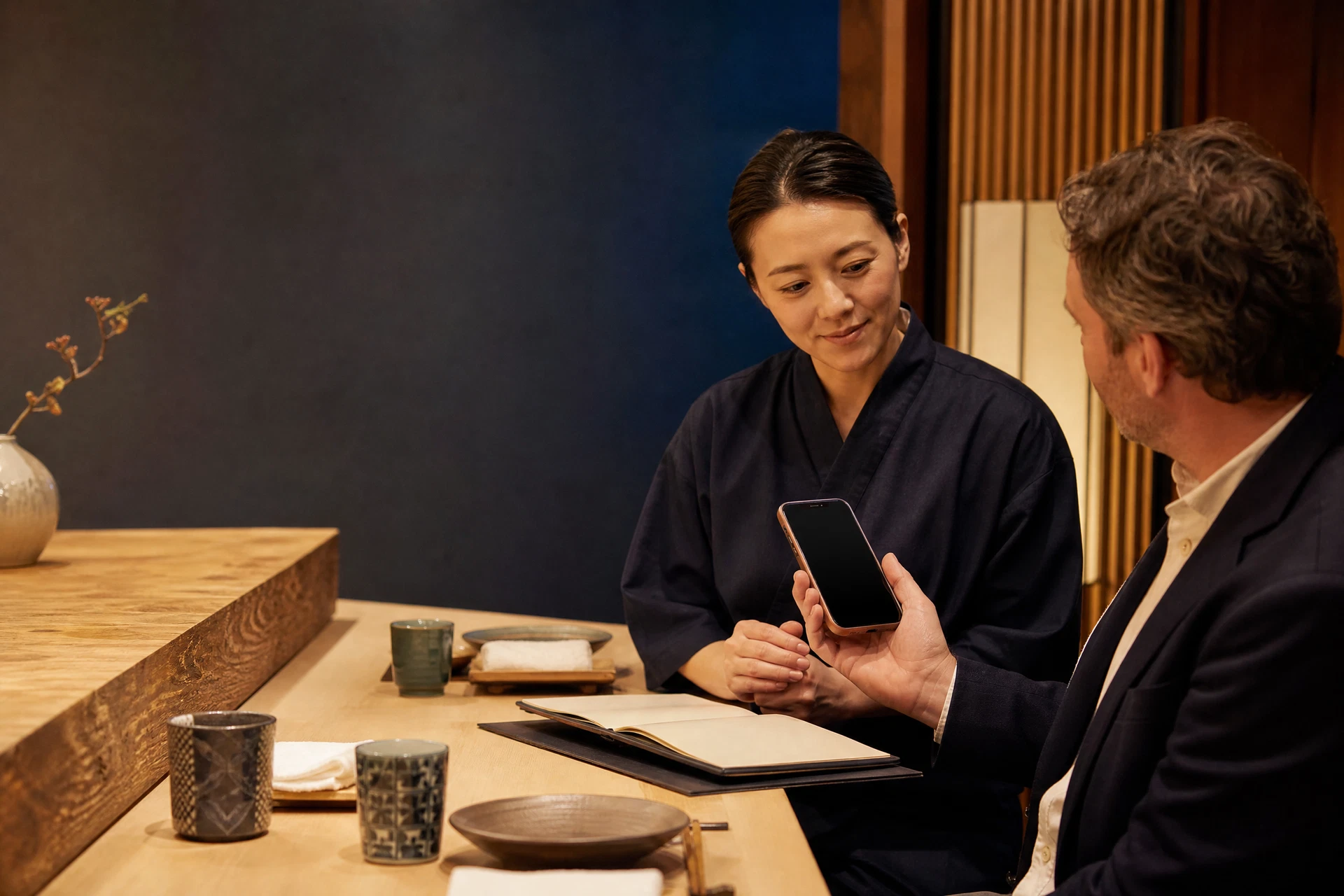
3. Choose a setting that can answer well
The JNTO vegetarian and vegan guide notes that explicitly specialised options can be limited in Japan outside clearly vegetarian or Buddhist-style settings [1]. That does not mean Tokyo lacks choice; it means that “vegetable-forward” is not automatically the same as vegetarian, vegan, halal, kosher, or allergy-aware.
Use a specialist restaurant or a venue that explicitly describes its approach when that is the safest fit. The JNTO restaurant search can be a starting point for dietary-oriented filters and resources. Then verify the individual restaurant's current menu and policy directly.
4. Prepare a useful reservation request
A good request includes the preferred date and time, party size, restaurant style, budget, hotel area, and all dietary details. It should also state what you would like the restaurant to confirm: whether the need can be accommodated, whether a fixed menu can be adjusted, whether a substitute dish is possible, and whether the venue needs more notice.
Avoid promising on behalf of the restaurant or relying on a translated menu alone. The clearest plan leaves room for a restaurant to say no. Choosing a venue that can serve you with confidence is more valuable than forcing a famous address into an unsuitable itinerary.
5. Treat confirmation as a conversation
A reply such as “we will try” is not the same as a confirmed approach. If a requirement is significant, ask what has been understood, whether any part of the menu remains uncertain, and whether the restaurant needs additional information. Keep a copy of the final communication and reconfirm if the party, date, or requirement changes.
For a severe allergy or a requirement with safety implications, the restaurant's own response should guide the decision. NipponMe can help convey accurate information, but cannot verify kitchen processes, prevent cross-contact, or guarantee a menu's suitability.
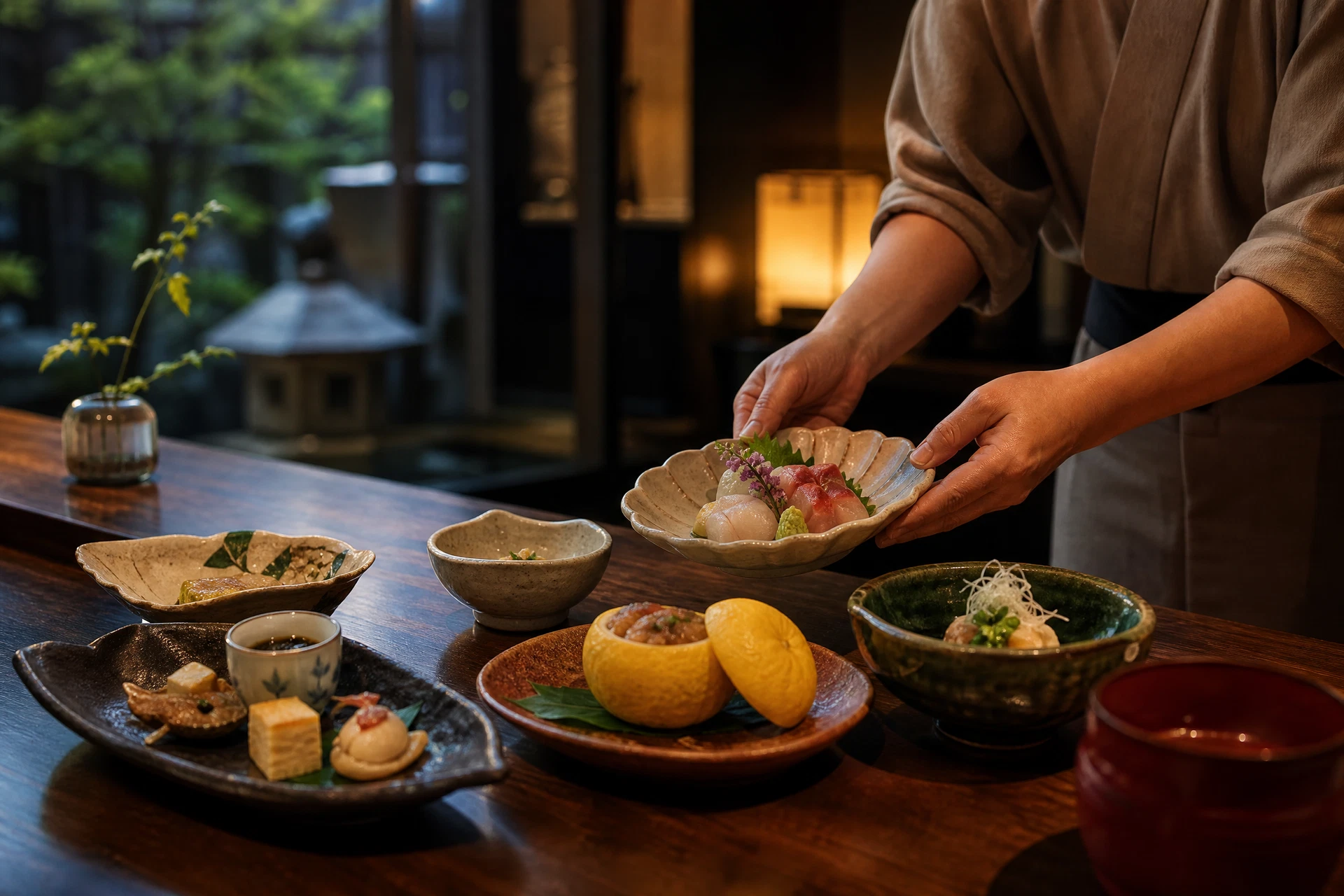
6. What to do on the day
Arrive on time, identify the booked guest, and briefly restate the requirement to staff without turning the table into a negotiation. If you are unsure about a dish, ask before eating it. Restaurants appreciate calm, direct questions far more than assumptions made after food has arrived.
A printed or phone-based summary can be useful, especially when a request has several ingredients or a particular language barrier. It should support the restaurant's reply, not replace it. If anything feels unclear, choose the safer course and ask again.
7. When dining support helps
Dining support is most useful when the meal matters and the details are hard to communicate across languages. Tell NipponMe your dates, party size, preferred dining style, exact dietary information, hotel area, and the occasion. We can help identify a suitable direction and communicate a reservation request when appropriate.
Our role is to make the request clear and the planning calmer. The restaurant controls availability, menu decisions, and whether it can accommodate the requirement. That distinction protects both your experience and the restaurant's ability to be honest.
8. Useful official resources
Use the JNTO Vegetarian and Vegan Guide and the JNTO restaurant-search resources to begin research. Then rely on the restaurant's own current channels for menu, allergen, reservation, and cancellation information.
Dietary dining support
Would you like help planning a Tokyo meal around dietary requirements?
Tell us your dates, party size, preferred dining style, hotel area, and exact requirements. We can help communicate a reservation request and suggest a considered direction, while the restaurant remains responsible for confirming menu suitability and availability.
Request dietary dining support