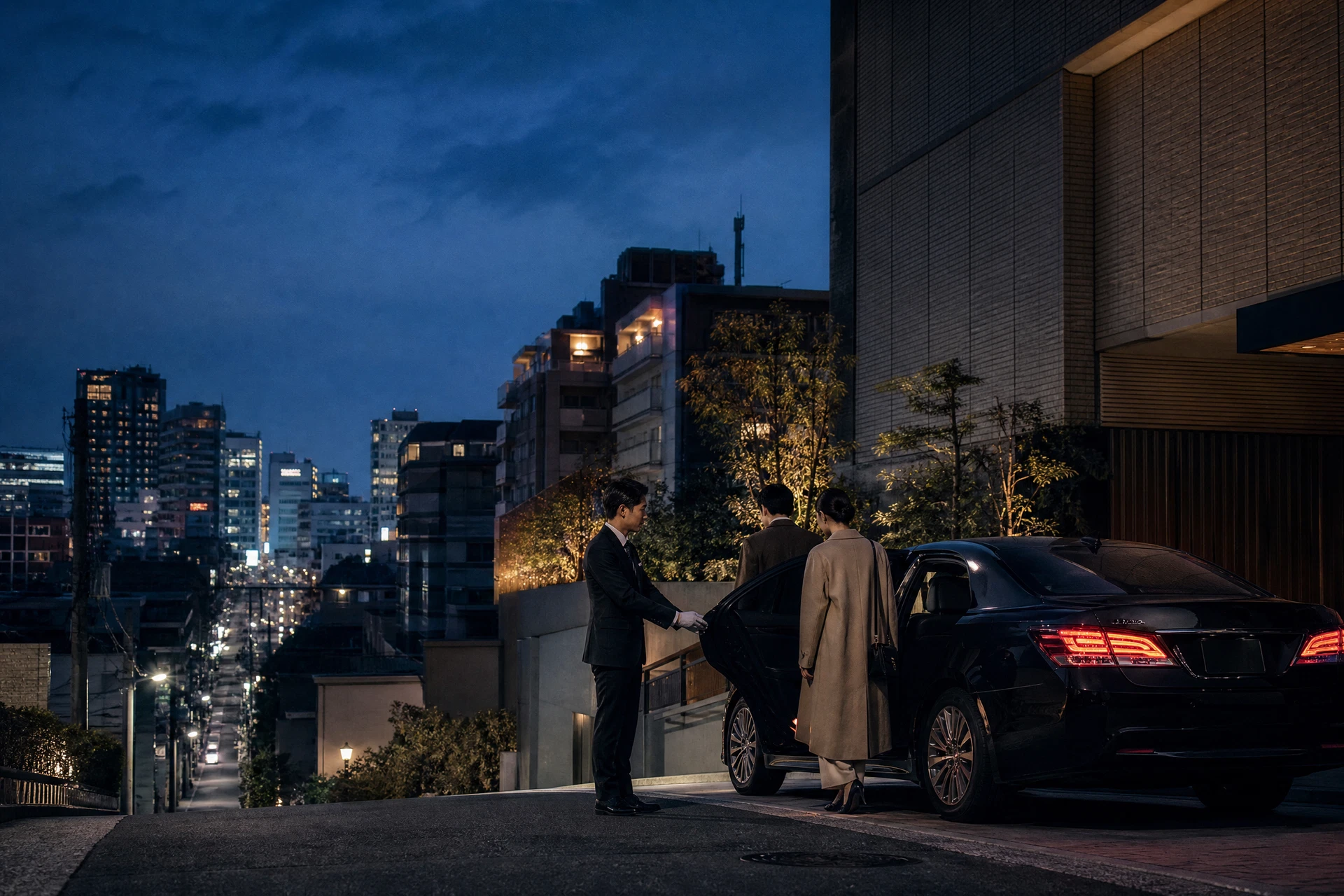
A private driver does not make a good Tokyo itinerary by adding more stops. It makes one better by connecting the right stops, protecting the parts of the day that matter, and giving you a more settled rhythm between hotel, neighbourhood, reservation, and evening plan.
This three-day itinerary is a framework rather than a fixed tour. It combines first-time highlights with enough room for a coffee, gallery, shopping pause, or meal that deserves more than a rushed arrival.
Before fixing the route, compare your priorities in the three-, four-, and five-day Tokyo itinerary guide and keep the private driver versus public transport guide close when you are deciding how the day should move between districts.
1. What makes a three-day private itinerary work
The most useful private-driver days begin with a hotel location, two or three real priorities, and any fixed reservations. The driver then supports the joins between them: the move from a quiet shrine to a lively district, from shopping bags to a hotel reset, or from a museum afternoon to a dinner across town.
Keep mornings for the experience that requires the freshest energy, place a flexible stop in the middle of the day, and allow the evening to settle around one good meal or view. Timed entry, traffic, weather, and restaurant policies still matter, so a thoughtful plan leaves buffers rather than assuming every transition is instant.
2. Day 1: Meiji Jingu, Omotesando, Shibuya, and Shinjuku
Begin in the calmer greenery around Meiji Jingu before the day turns toward fashion, design, and city energy. From there, choose either Harajuku's side streets or Omotesando's architecture and cafés, then continue to Shibuya. This order gives the day a natural build rather than an abrupt jump between unrelated districts.
Use Shibuya as an afternoon rather than a checklist. A private vehicle is especially helpful if you would like to finish in Shinjuku for a skyline view or dinner without carrying purchases through several rail changes. Ask for a hotel pause before the evening if the group needs one; that reset often makes dinner feel like part of the trip rather than its final task.
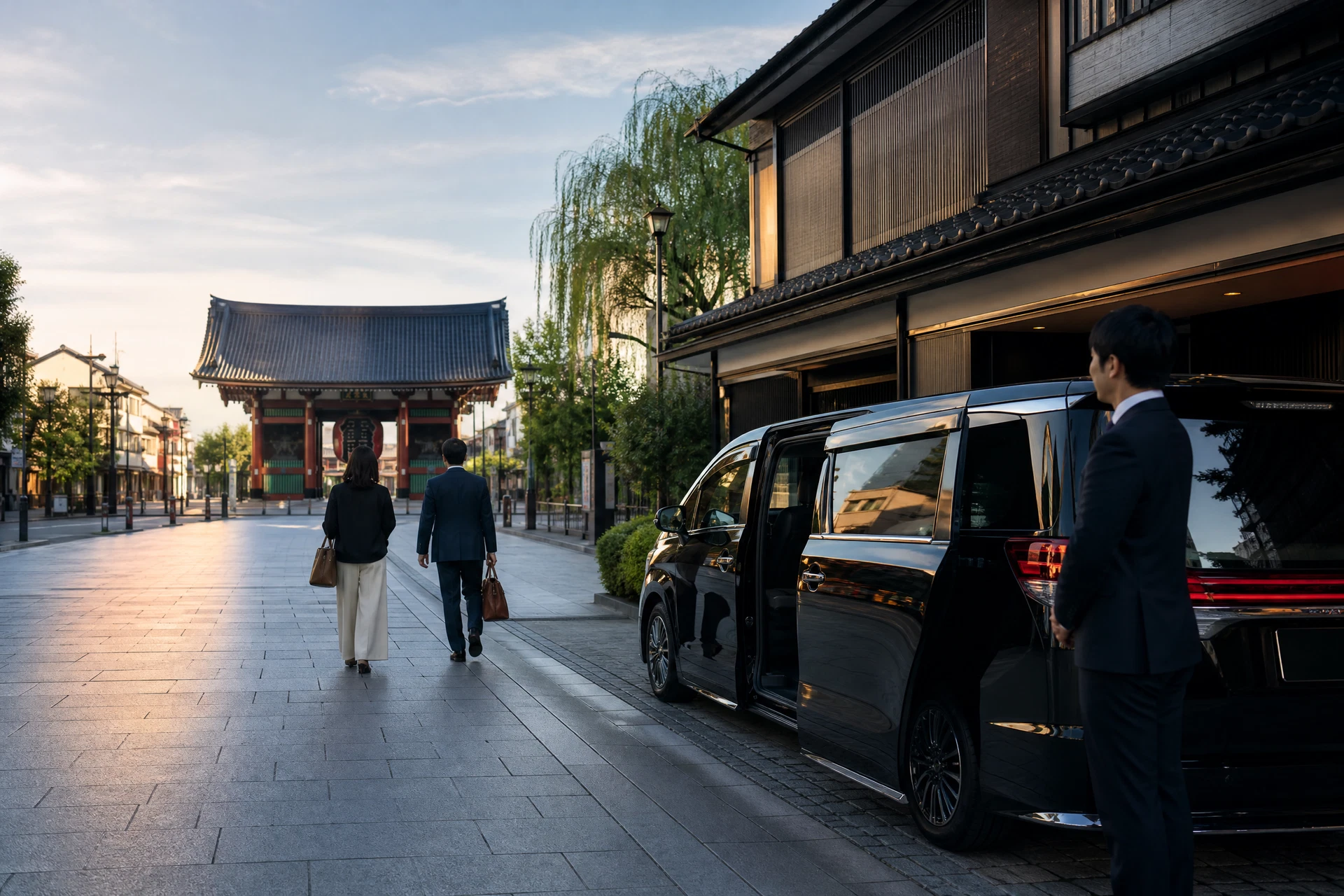
3. Day 2: Asakusa, Ueno, central Tokyo, and Ginza
Use the second day for Tokyo's older and central layers. Start early in Asakusa, when the temple precincts and surrounding streets feel more spacious. Then choose Ueno for a museum, park, or market atmosphere, or move south along the city's central axis toward Tokyo Station and the Imperial Palace area.
Ginza is a strong evening finish when the day includes a serious dinner, department-store food halls, or polished shopping. The value of a private driver here is not speed for its own sake; it is the ability to sequence distant parts of the city without treating every handover as a logistical project.
4. Day 3: Culture, waterfront, and a personal finish
Make the final day personal. For some travellers, that means contemporary art, architecture, or gardens. For others, it is Toyosu and Odaiba, a kitchenware or design-focused route, a long lunch, or time set aside for a restaurant that was difficult to reserve. This is the right day to choose what did not fit neatly into the first two.
A waterfront finish can work beautifully in clear weather, but it should remain flexible. If rain, heat, or a reservation changes the equation, your driver can support a quieter museum, café, shopping, or hotel-based alternative without making the day feel cancelled.
5. Build restaurant and timed bookings into the route
A reservation should shape the day, not sit uncomfortably on top of it. Give an important sushi counter, kaiseki meal, or special dinner enough time before and after it. The same rule applies to timed museum entries, gardens with seasonal lighting, and experiences that cannot simply be moved to another hour.
For guidance on booking from overseas—and support when an English site is unavailable or a restaurant accepts phone reservations only—read our Tokyo restaurant reservations guide. Share every fixed booking before your private itinerary is confirmed.
6. Use the driver for continuity, not more stops
A well-designed private day still needs fewer stops than most first itineraries suggest. The car is best used to hold the day together when walking comfort, luggage, a family's pace, shopping bags, a dinner, or the distance between districts makes public transport less appealing. It does not remove the need to choose carefully.
If you are not sure whether three days is enough for your priorities, compare the trade-offs in our guide to three-, four-, and five-day Tokyo itineraries before fixing the route.
7. What to share before requesting a plan
The more clearly you describe what matters, the more useful the itinerary can become. Share your hotel, available hours, travel party, luggage, walking comfort, children's ages if relevant, priority districts, and any reservations or admissions that cannot move. Mention the experiences you would be disappointed to miss, then leave the rest open enough for sensible routing.
A private plan can include hotel pickup, sightseeing, dining, shopping, and a final drop-off, but it should always be built around the actual day you want—not a list created only to fill the vehicle's hours.
8. Official planning references
Use the GO TOKYO guide services information as a reminder to consider reservations, walking distance, outdoor exposure, and seasonal comfort before setting a route. Always reconfirm operating hours, ticket conditions, and weather-sensitive details with the relevant official venue or transport source shortly before travel.
Three days, shaped around you
Want a private Tokyo itinerary that fits your priorities?
Tell us your dates, hotel, party, priority districts, and any restaurant or admission bookings. We can help shape a considered three-day Tokyo plan with a professional driver.
Plan a private Tokyo itinerary