Tokyo rewards travellers who give it time. A slower route can make room for a garden bench, a museum gallery, an unhurried lunch, an elegant hotel break, and an evening that arrives with energy still available. The goal is not to see less by default; it is to make each part of the day easier to enjoy.
Every traveller defines comfort differently. This guide offers a planning framework rather than making assumptions about age, mobility, or ability. The best itinerary begins with the details you want to share and the pace you actually prefer.
To make the first and last parts of the trip as easy as the sightseeing, read the first-time Tokyo planning guide and the Haneda airport transfer guide before settling the daily route.
1. Treat comfort as a design decision
A polished Tokyo itinerary starts by designing for what helps you enjoy the day. That may mean fewer neighbourhoods, familiar access to restrooms, a restaurant with a comfortable seating style, a later start, a midday hotel break, a vehicle between distant areas, or simply knowing that you do not have to rush a quiet museum or garden.
Accessible tourism is intended to make travel enjoyable for a wide range of visitors, including elderly travellers, people with disabilities, families with children, and anyone needing assistance [1]. That principle is useful even when you do not identify as needing formal accessible travel support: communicate needs early, and make the route easier before the day begins.
2. Set your own movement preferences
There is no universal “senior itinerary.” Start instead with the pace and conditions that suit you: how long you like to walk at one time, whether steps or long platforms are a concern, the kind of seating you prefer, how frequently you want a restroom or café stop, the hours that feel best, and whether you use a mobility aid or want to avoid busy stations.
Share those practical preferences with your hotel, restaurant, attraction, and transport providers. GO TOKYO recommends thorough planning and detailed communication with accommodation when travellers have particular requirements [2]. Current venue details are more useful than assumptions based on a broad category of traveller.
3. Choose a smaller geographical radius
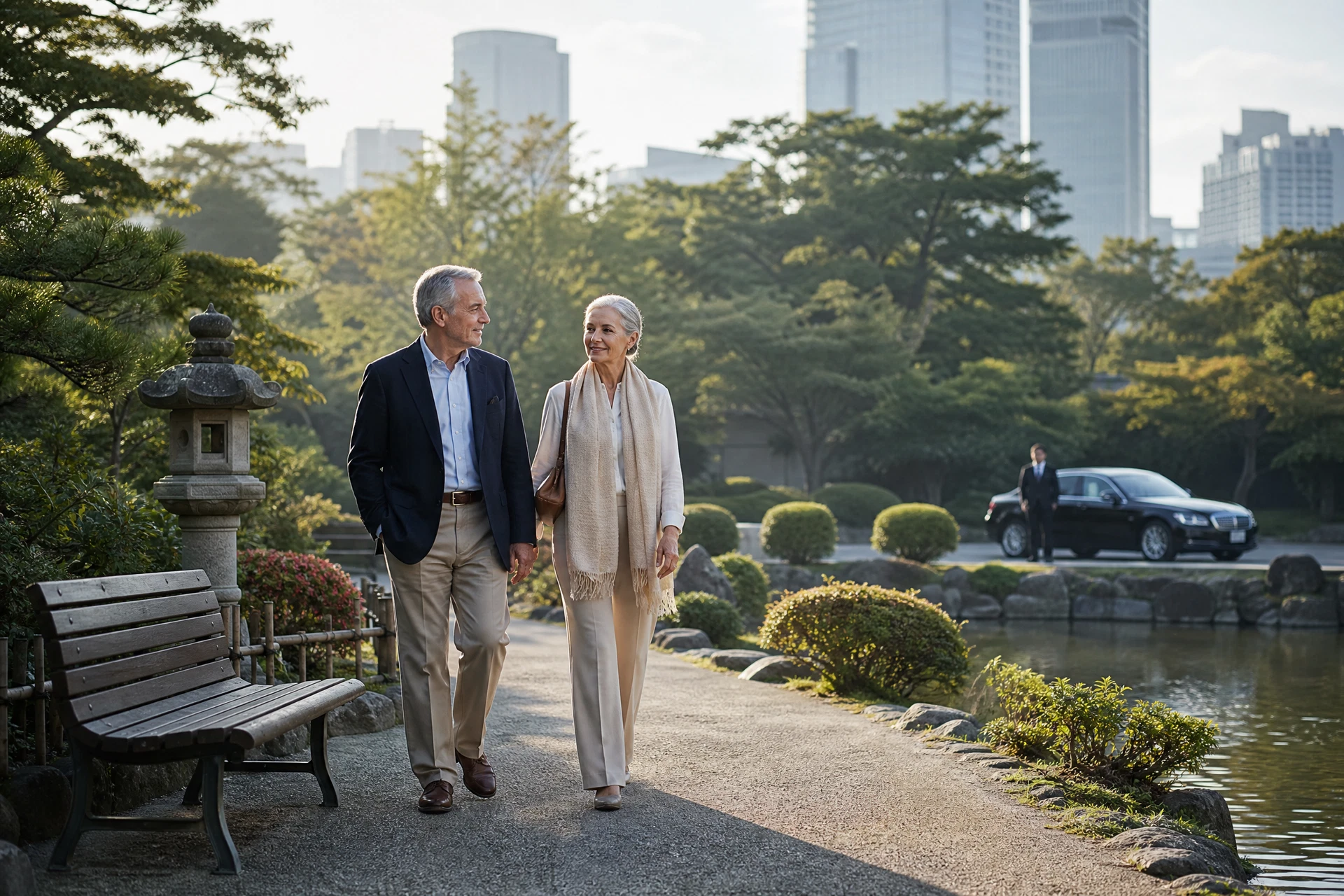
Tokyo is best approached in connected chapters. Choose one central area for the morning and early afternoon, then either return to the hotel or make a deliberate vehicle transfer to your evening plan. This keeps the city readable and allows you to linger when a street, garden, gallery, or meal deserves more time.
A good one-day pairing might be Marunouchi, the Imperial Palace area, and Ginza; Asakusa and Ueno; or Roppongi art and a nearby evening view. The right choice depends on hotel location, interests, reservations, and the practical access information you confirm directly with each destination.
4. Build a start, pause, and finish
A comfortable day has a clear opening, a genuine pause, and a satisfying close. Begin with one main place before the busiest hours, settle into lunch without treating it as a refuelling stop, then give the afternoon a slower indoor cultural anchor or a hotel reset. Finish with a dinner, garden, or view that does not require another demanding cross-city journey.
The pause is not an empty gap. It is what allows the final part of the itinerary to feel like a pleasure rather than a test of endurance.
5. Choose transport with fewer surprises
Tokyo's rail system can be excellent, particularly for a compact route. GO TOKYO notes that most stations in metropolitan Tokyo have an elevator and many have wheelchair-accessible toilets, while also advising travellers to avoid peak commuting times when platforms may be busy and narrow [2]. Conditions differ by station and route, so use current station and operator information for a specific trip.
A private car can reduce the friction of a multi-area day, luggage transfer, restaurant reservation, or hotel-to-attraction movement. If you have a mobility aid, specific boarding requirements, or other accessibility needs, let us know early so vehicle suitability and the current access at every stop can be checked rather than assumed.
6. Confirm access and amenities in advance
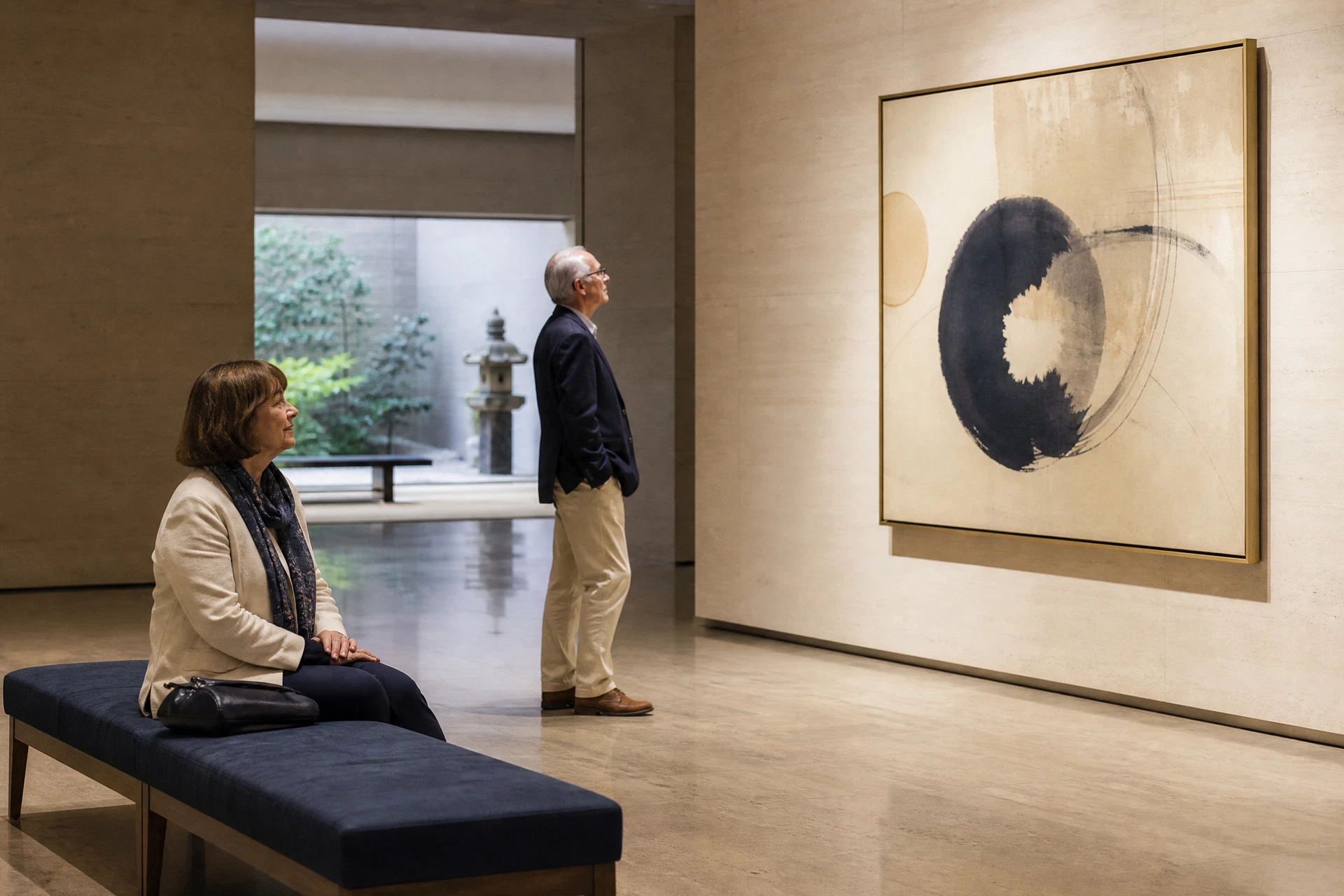
The most helpful planning question is not “is Tokyo accessible?” but “will this particular part of this particular day work for us?” Confirm entrance routes, elevators, seating, restroom access, mobility-device policies, quiet waiting areas, dining arrangements, and current construction or event restrictions directly with the hotel, attraction, station, or restaurant.
Tokyo Tourist Information Center's accessible-tourism resources include multilingual support and an accessible counter at Busta Shinjuku with route information for wheelchair and stroller users [3]. Check the official centre information for current services, terms, and availability before depending on them.
7. When a private car changes the day
Private transport is at its best when it removes friction rather than fills time. It can simplify an airport arrival, carry shopping or luggage, connect a garden with a museum and dinner, give a group a reliable reset point, and make a route easier to adjust around weather or energy. It is also useful when you prefer not to navigate several stations during a single sightseeing day.
A good consultation begins with your hotel, dates, interests, walking comfort, preferred pace, dining wishes, luggage, and any access considerations you want us to know. We can then help shape a route around your priorities and check what needs confirmation.
8. Let your hotel support the itinerary
A central hotel is helpful, but a hotel you can comfortably return to can be even more valuable. Before booking, ask about the entry route, lift access, room configuration, bath or shower details, restaurant access, and how easily a vehicle can collect you. Those answers may shape the itinerary more meaningfully than a hotel's distance from a single landmark.
A midday return is one of the simplest ways to make Tokyo feel more generous. It creates space for a change of clothes, a quiet sit-down, or simply a reset before a special dinner or sunset view.
9. Official references before you go
Use the official GO TOKYO accessibility guide, the JNTO Accessible Tourism guide, and Accessible Tourism Tokyo as starting points. Confirm all time-sensitive access, facilities, and transport information directly with the relevant venue or operator before travel.
Tokyo at your own pace
Would you like a slower, more comfortable Tokyo itinerary?
Tell us your dates, hotel, interests, preferred pace, and the practical details that will make the trip feel easier. We can help shape a private Tokyo day with thoughtful routes, well-timed pauses, and room to enjoy each place.
Plan a comfortable Tokyo day