Winter rewards a different kind of Tokyo itinerary. The air can make an evening street feel unusually vivid, a clear day can sharpen the horizon, and a long lunch or a gallery visit can be every bit as meaningful as a landmark walk.
The key is to compose the day around warmth, daylight, and a simple evening. Do not build around an annual illumination date or a distant view as if either were guaranteed. Build a good day first, then let the seasonal moments improve it.
To turn a winter evening into a complete plan, use the restaurant reservations guide with the senior travellers guide for comfortable timing, warmth, and a well-placed dinner.
1. Build a winter day around light and warmth
Winter does not ask you to stay indoors all day. It asks you to use the outdoor time that matters most. Begin with a morning walk, garden, shrine, market, or viewpoint while you are fresh; then move deliberately to a museum, a long lunch, a hotel reset, or a cultural experience as the temperature drops.
Carry a warm layer for evening streets, and make your dinner area the same district as your illumination or view where possible. A shorter, warmer sequence is generally more memorable than trying to cross the city between daylight, shopping, and a late-night display.
2. Treat illuminations as a live evening plan
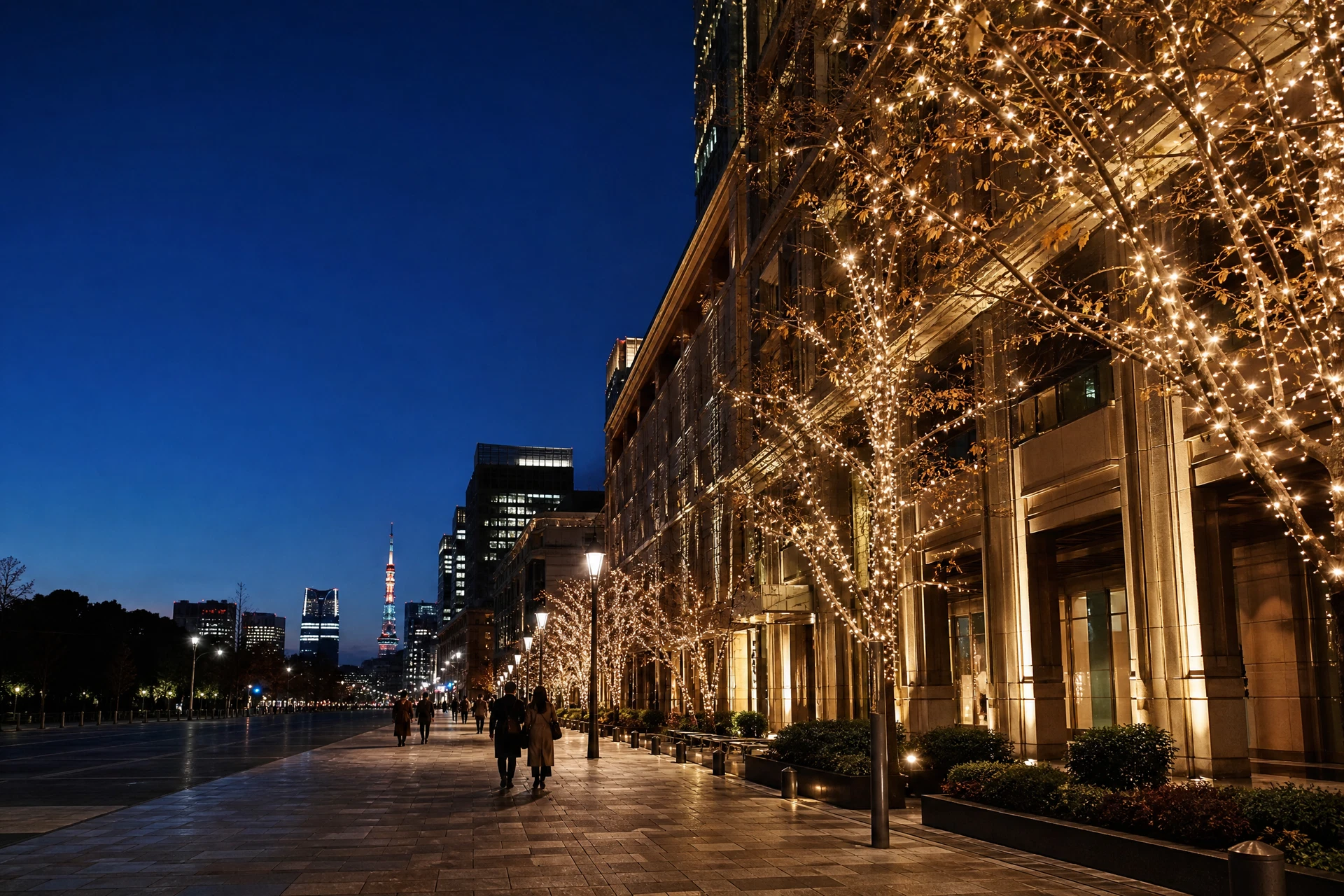
GO TOKYO highlights winter light displays and city views around areas such as Marunouchi, Ginza, Omotesando, Roppongi, Ebisu, and Shinjuku, and notes that many programs continue beyond Christmas [1]. But dates, routes, ticket rules, themes, and even lighting hours change every year. Treat official event pages as the final authority.
The most graceful approach is to choose one neighbourhood, arrive before the main crowd, take a short walk once the lights come on, and continue to a reservation nearby. The lights should be an evening accent, not an extra transfer appended to an already full day.
3. Use winter food to create an anchor
A winter meal can give the day a centre. It may be a relaxed soba lunch, a warming bowl of ramen, a seasonal kaiseki course, an izakaya dinner, or a quiet table where the group can slow down after a museum or garden. The choice matters less than the pacing: leave enough time to sit, warm up, and enjoy the area you have chosen.
For more formal restaurants, book early and share dietary needs, the ages of children, preferred pace, and any accessibility considerations when reserving. A dinner that fits the day's tempo will feel far more special than an ambitious booking reached late and tired.
4. Make clear-day views an opportunity, not a promise
A crisp winter morning can make Tokyo's longer views feel especially clear, but visibility is always dependent on weather, haze, wind, and the day itself. Treat a skyline, waterfront, or distant-mountain view as an opportunity to take when conditions are good, not as a promised result of your itinerary.
Keep a second version of the plan ready: a museum, an observatory with an indoor component, a department store, a food hall, or a neighbourhood walk close to your lunch or dinner. Check current weather and warnings before setting out, then decide whether the day calls for a long look or a warm cultural route.
5. Let indoor culture hold the centre of the day
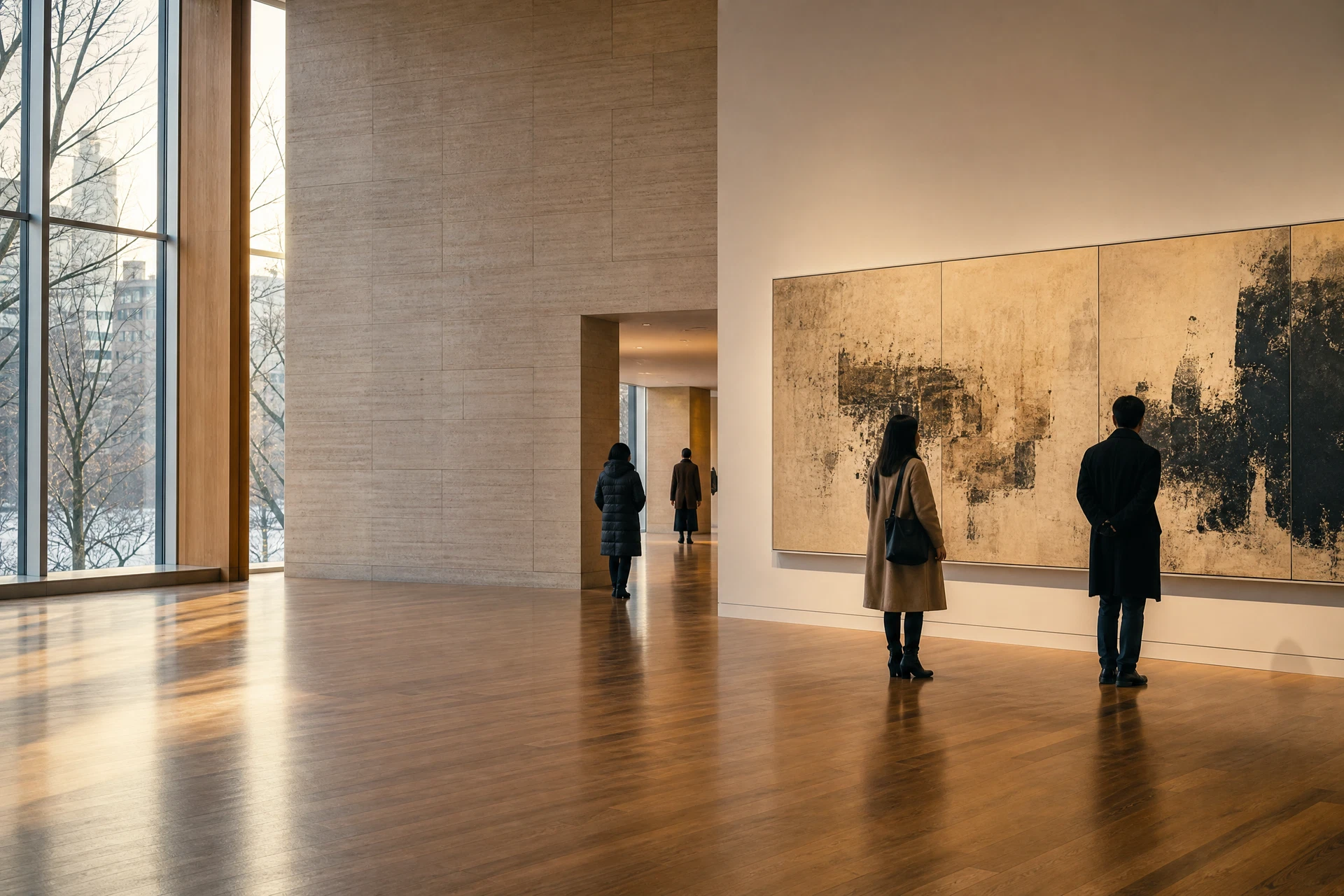
Winter is an ideal season for giving museums, galleries, theatres, food halls, design spaces, and architecture the time they deserve. Rather than treating indoor stops as weather backups, make one a central anchor. Ueno, Roppongi, Marunouchi, Ginza, and Tokyo Station each offer different ways to combine culture with food and an easy evening finish.
Pair by geography and check the venue's current opening hours, closed days, and timed-entry policy. A single museum or exhibition with time for lunch and a later light walk can be more satisfying than several short indoor stops joined by cold crossings.
6. A comfortable winter day in Tokyo
7. When a private car makes winter smoother
A private car can be useful when the day joins a weather-sensitive viewpoint, a museum, a formal dining reservation, shopping, children or older family members, and an evening stop that would otherwise require several exposed station transfers. It gives the group a warm, predictable link between places while keeping the route adaptable.
Tell us your dates, hotel, group, preferred cultural stops, dinner plans, walking comfort, and whether illuminations or a clear-day view matter most. We can help shape a winter day that feels warm, well-paced, and genuinely seasonal.
8. Official references before you go
Use GO TOKYO's current Winter Illumination Guide for seasonal ideas, then confirm each event through its own official page before committing to a route or reservation. Consult the Japan Meteorological Agency for current weather and warnings.
Winter at your pace
Would you like a winter day designed around comfort and light?
Tell us your dates, hotel, group, preferred pace, cultural interests, dinner plans, and whether a clear-day view or winter lights matter most. We can help create a private route that keeps the season enjoyable from morning through evening.
Plan a private winter day