The most memorable Tokyo sushi meals are rarely defined by a rule you managed to remember. They are defined by attention: a chef shaping each piece for the moment, rice that has been tuned as carefully as the fish, and guests who give the counter enough time to become a conversation.
This guide is for visitors who want to approach that experience with confidence. It explains the practical decisions that matter before you book, the gentle points of etiquette that make a counter comfortable for everyone, and the information that allows us to help recommend a table that genuinely suits your trip.
Before committing to a counter, review the restaurant reservations guide and, where relevant, the dietary requirements guide so expectations are clear before the meal.
1. What a Tokyo sushi counter actually offers
Sushi is not simply raw fish. JNTO describes it as vinegared rice—shari—paired with a topping or garnish, which may be seafood, egg, vegetables, raw, or cooked [1]. At a refined counter, the rice temperature, seasoning, amount of rice, cut of fish, preparation, and the instant at which a piece is served are part of the chef's point of view.
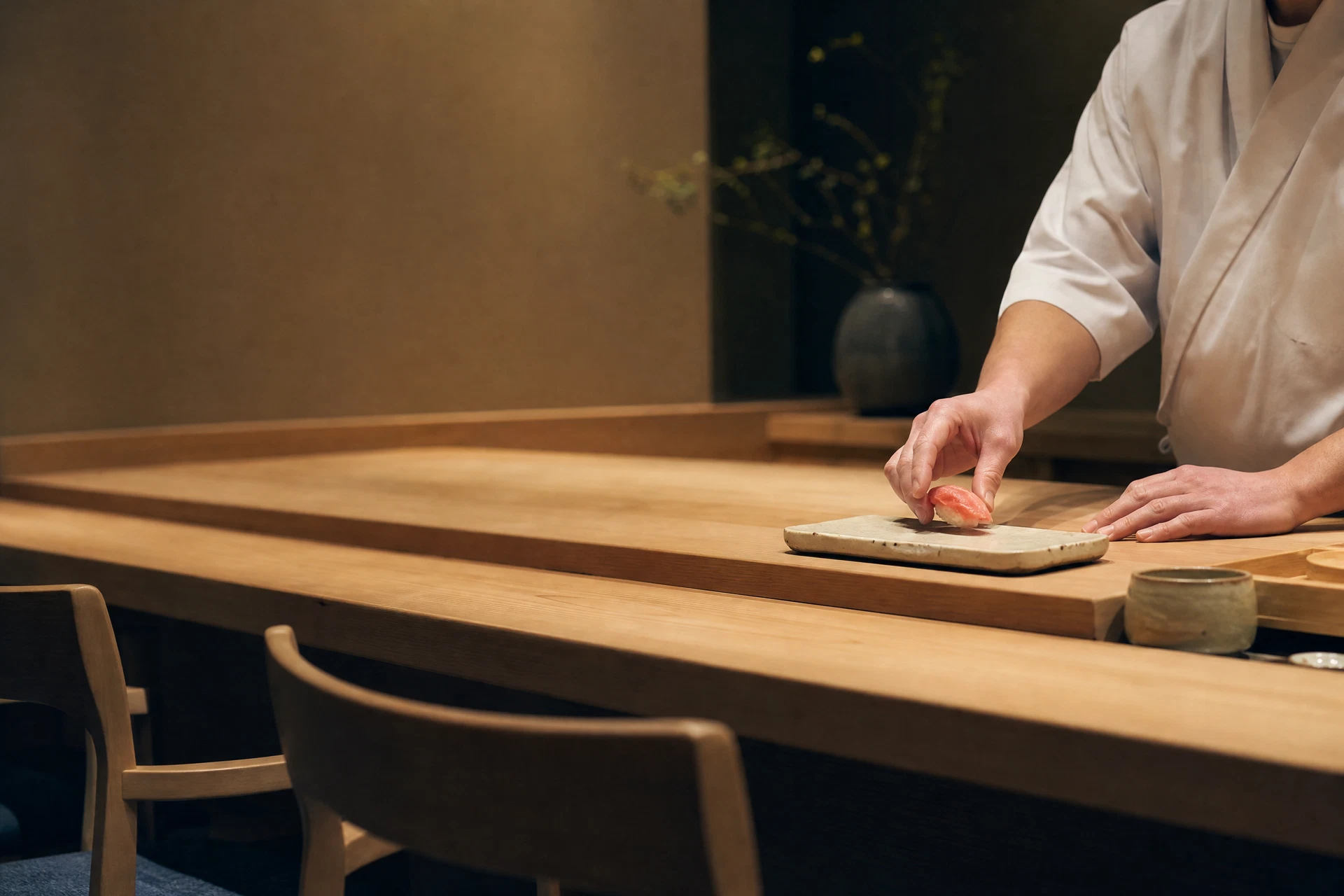
Edomae sushi is closely associated with Tokyo and counter service: the chef forms nigiri and slices fish to order, then serves it immediately [1]. That closeness is the appeal. It also means a counter dinner has its own pace, sound level, and sense of occasion, distinct from a large dining room or a quick neighbourhood lunch.
2. Choose the right sushi format for your trip
Tokyo offers sushi at many levels, from supermarket and standing-bar options to kaitenzushi, local family-run restaurants, lunch counters, and formal omakase. A high-intimacy counter is not automatically the best choice for every group. Ask whether you want craft at close range, a relaxed local meal, a first introduction to sushi, a celebration, or a format where conversation can carry the evening.
The live MICHELIN Guide Tokyo sushi directory is useful for current research because it shows cuisine, distinction, price range, counter-dining, and service filters. Treat it as a discovery tool, not a substitute for checking the restaurant's own current booking rules, menu policy, and availability.
3. Booking tips: what to decide before you ask
Popular omakase restaurants can have very few counter seats, and JNTO advises that bookings are generally necessary for this style; a same-day walk-in at a sought-after address is often difficult [1]. Start research while you are planning the trip rather than treating the meal as an empty evening to fill after arrival.
A useful request includes the date range, number of guests, lunch or dinner preference, hotel area, budget comfort, cuisine preferences, allergies, children, accessibility needs, language comfort, and the purpose of the meal. Ask about deposits, cancellation terms, payment method, exact arrival time, and whether there are fixed seatings. These details protect both the restaurant and your evening.
4. Arrival, timing, and counter awareness
A refined counter is usually intimate, so punctuality is practical courtesy rather than ceremony. Plan your route, allow time to find the entrance, and arrive ready to be seated rather than exhausted from a cross-city dash. If the restaurant asks you to arrive at a particular time, follow that guidance; if you are delayed, contact the restaurant as early as possible through the channel it specifies.
Keep the counter comfortable: place large bags where staff direct, silence your phone, and avoid strong fragrances that can distract from delicate food and the people beside you. These are not tests of sophistication. They simply acknowledge that the room is small and the meal is sensory.
5. Counter etiquette without anxiety
The simplest rule is to follow the chef or staff. JNTO notes that hands as well as chopsticks can be acceptable for sushi, especially in higher-end settings [1]. If you are unsure, observe the presentation, ask quietly, or use the method that feels controlled and respectful.
When soy sauce is offered, JNTO recommends dipping the topping rather than the rice, because rice absorbs too much and can lose its structure. Ginger is a palate cleanser between pieces, not a topping. Never pass food from chopstick to chopstick or stand chopsticks upright in a bowl; place them on the rest or as staff indicate [1].
6. What to expect from an omakase sequence
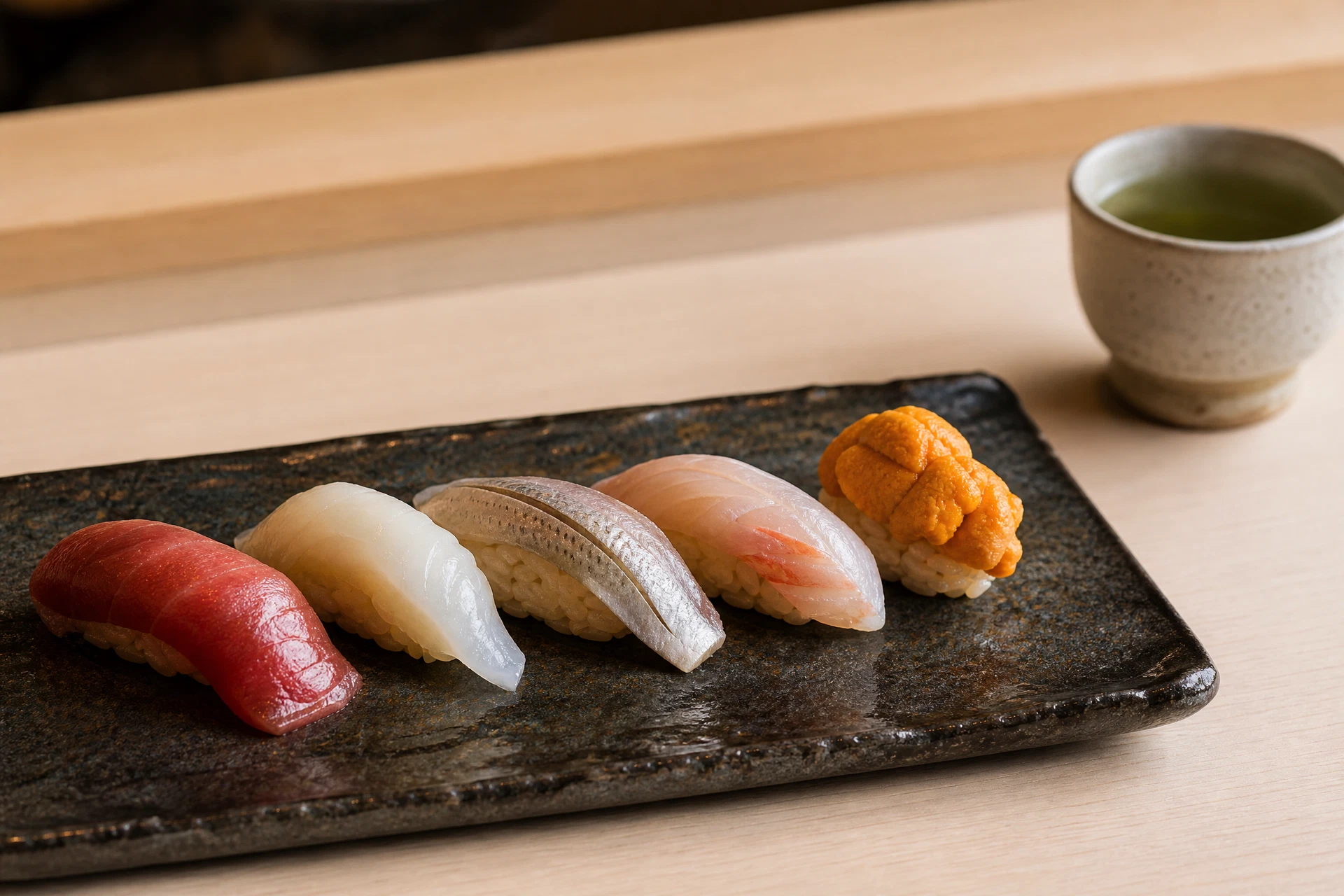
Omakase means that you entrust the meal's selection to the chef. That does not require you to decode every piece or recognise every fish. It asks for openness to a sequence that may move through lighter and richer flavours, cooked and raw elements, or small dishes alongside nigiri. The chef may season a piece before it reaches you, in which case extra soy sauce may not be needed.
Eat each serving at a comfortable pace while it is at its intended temperature. If you have a question, choose a quiet natural moment rather than interrupting a service movement. Genuine curiosity is welcome; the aim is not to demonstrate knowledge, but to be present for a meal whose details have been chosen for you.
7. Dietary needs, drinks, and conversation
Communicate allergies and dietary restrictions before a reservation is confirmed, not at the counter. Raw seafood, shellfish, fish-based stocks, rice seasoning, and the fixed nature of some menus can make last-minute changes difficult. A restaurant may be able to help, may need advance notice, or may not be a suitable fit; an honest answer is better than a risky one.
Green tea is a classic companion, and JNTO also notes that sake, wine, and sparkling wine can pair well with sushi [1]. Ask staff for help if you would like a pairing. Conversation with the chef can be rewarding, but the right level depends on the counter; let the room tell you how much space it has for dialogue.
8. When dining consultation makes a difference
The right sushi experience is not always the one with the longest waiting list. It is the one that matches your group, your comfort with a chef-led format, your schedule, and the kind of occasion you are trying to create. A polished lunch can be ideal after a museum visit; a quiet counter can be perfect for two people; a more flexible format may be wiser for a family or a business group.
NipponMe can help clarify the brief before a reservation request is made. Tell us where you are staying, your dates, party size, budget comfort, dietary needs, preferred tone, and whether you want a landmark counter, a welcoming first omakase, or a less formal local meal. We can recommend thoughtful options and assist with a reservation request, always subject to the restaurant's own availability and policies.
9. Official references to use before you book
Read the JNTO Sushi in Japan Guide for a useful foundation on forms, counter service, etiquette, and booking context. Use the live MICHELIN Guide Tokyo sushi listings to explore current selections and filters. Then check each restaurant's own official channels for live reservation, cancellation, allergy, dress, and arrival information.
Tokyo sushi consultation
Would you like help choosing the right Tokyo sushi experience?
Tell us your dates, party, hotel area, budget comfort, allergies, and whether you prefer an intimate counter, a first omakase, a celebratory dinner, or a relaxed local option. We will help narrow the field and assist with a reservation request for the right fit.
Request a sushi consultation