
The most useful Tokyo travel tips are not secret shortcuts. They are the small preparations—arrival, connectivity, payments, luggage, reservations, and timing—that let the first day feel calm enough to enjoy.
Use this guide as a pre-departure checklist. For information that can change, such as entry procedures, visa rules, customs, transport schedules, and venue hours, confirm the latest details through official sources before travel.
For the broader shape of a first visit, begin with the first-time Tokyo planning guide and use the Tokyo airport meet-and-greet guide when the arrival handoff needs more detailed preparation.
1. The short answer: prepare the friction points
Tokyo works best when the decisions that are difficult to make while tired are handled before you board the plane. Know how you will get to the hotel, how you will stay connected, which bookings are time-sensitive, and what your first evening should look like. Then leave the rest of the city room to unfold.
Best for
International visitors who want a practical, confidence-building pre-departure plan rather than a generic list of attractions or advice that may be out of date.
2. Confirm entry and arrival details from official sources
Entry, visa, customs, and arrival processes can change, so use the latest information from Japanese government and official tourism sources rather than relying on an old social post or an itinerary template. Keep your passport, accommodation details, and any required travel documentation accessible during the journey.
Treat this article as planning guidance, not immigration or legal advice. If a requirement affects whether you can board or enter Japan, confirm it with the appropriate official authority and, where relevant, the Japanese embassy or consulate for your place of residence.
3. Plan the first airport-to-hotel move
The first transfer shapes the tone of the stay. Haneda and Narita each connect to central Tokyo by a mix of rail and bus services, but the best choice depends on flight time, hotel area, luggage, weather, and the group. Avoid deciding only after arrival, when a long flight can make a simple transfer feel complicated.
Compare the details in our Haneda transfer guide and Narita transfer guide before locking in the hotel-to-airport plan.
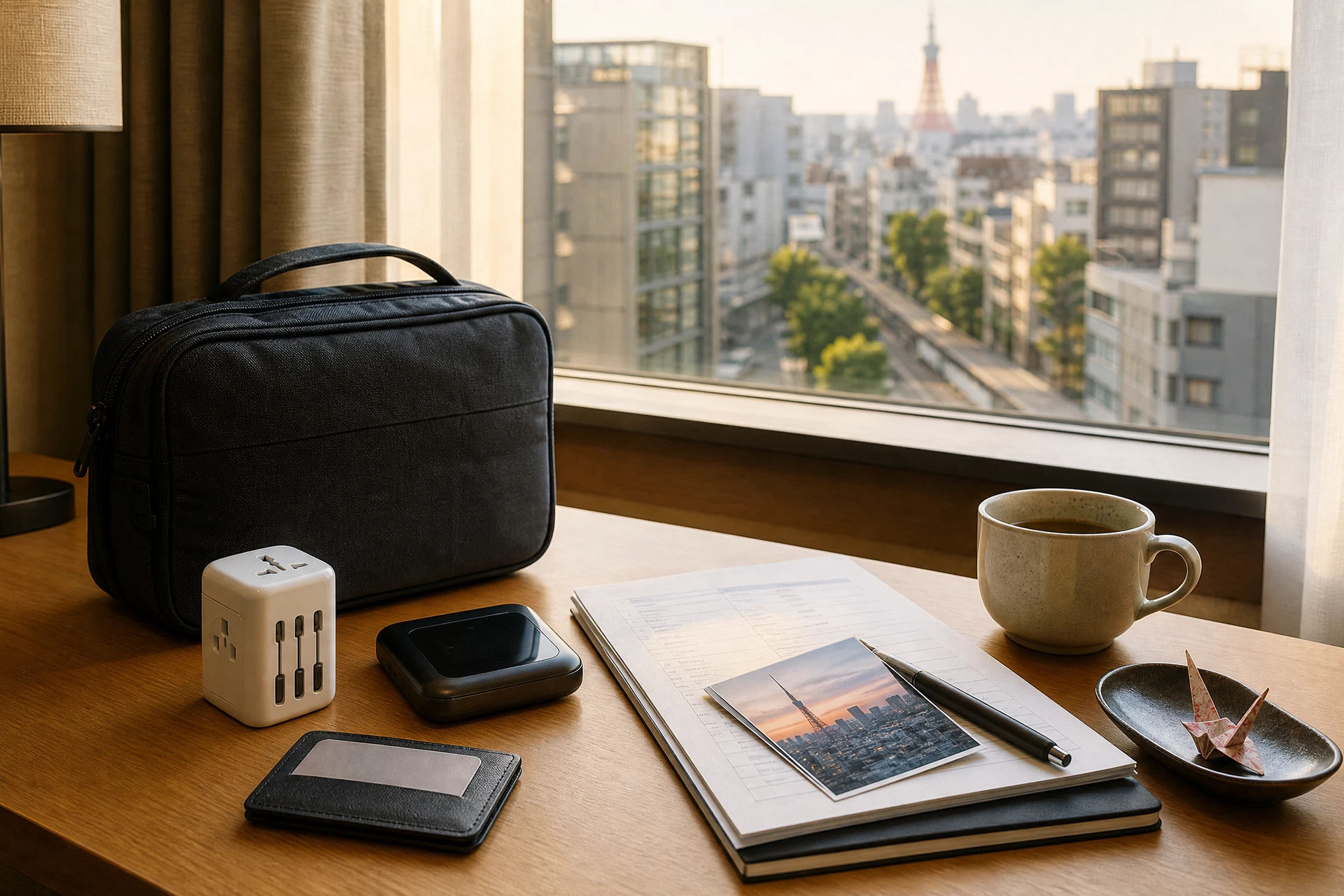
4. Set up connectivity, charging, and practical payments
Plan how you will access maps, hotel messages, ticket information, and reservations before you arrive. Japan's official visitor guidance also covers Wi-Fi, electricity, currency, credit cards, and travel cards; read the current details for the devices and payment methods you expect to use.
Keep a small amount of flexibility in the payment plan. Major Tokyo businesses often accept cards, but individual shops, cafés, and transport situations can differ. A charged phone, an appropriate plug adapter, and a backup payment option are simple preparation, not overplanning.
5. Share hotel, luggage, and timing details early
Your hotel address, check-in time, luggage count, and flight details matter most on the days when you are least interested in solving logistics. Save the hotel name and address in a form you can show, understand the property's check-in policy, and tell any transfer provider about bulky bags, children's seats, or mobility needs in advance.
6. Put time-sensitive reservations in the right place
A restaurant, museum, or viewpoint booking should fit the day's geography and the pace of the group. Keep enough time before a special dinner for a hotel reset or a transit delay. If a restaurant has a Japanese-only site or accepts reservations by phone, planning early matters even more.
Our Tokyo restaurant reservations guide explains when online booking works and when NipponMe can assist with a request to a phone-only or Japanese-language venue.
7. Arrive with a little cultural awareness
A small amount of awareness goes a long way. In restaurants, taxis, temples, and shared public spaces, notice the local rhythm before assuming the same habits apply. For example, tipping is not generally expected in Japan, and a calm, respectful approach to queues, shared space, and reservations is always useful.
8. Build a trip that can absorb changes
Weather, a tired first afternoon, a queue, and a sudden interest can all change the ideal plan. Keep arrival day light, group stops by area, and leave a buffer before fixed reservations. A practical trip is not rigid; it has enough structure that a change does not unravel the whole day.
9. Official planning references
The JNTO first-time visitor planning guide covers current practical topics including connectivity, electricity, currency, travel cards, weather, visas, customs, and visitor support. Use the linked official sources for any time-sensitive details before departure.
Start smoothly
Want the first move in Tokyo to feel easy?
Share your flight, airport, hotel area, luggage, travel party, and first-evening plans. We can help arrange an airport pickup that lets the trip begin at a calmer pace.
Arrange airport pickup