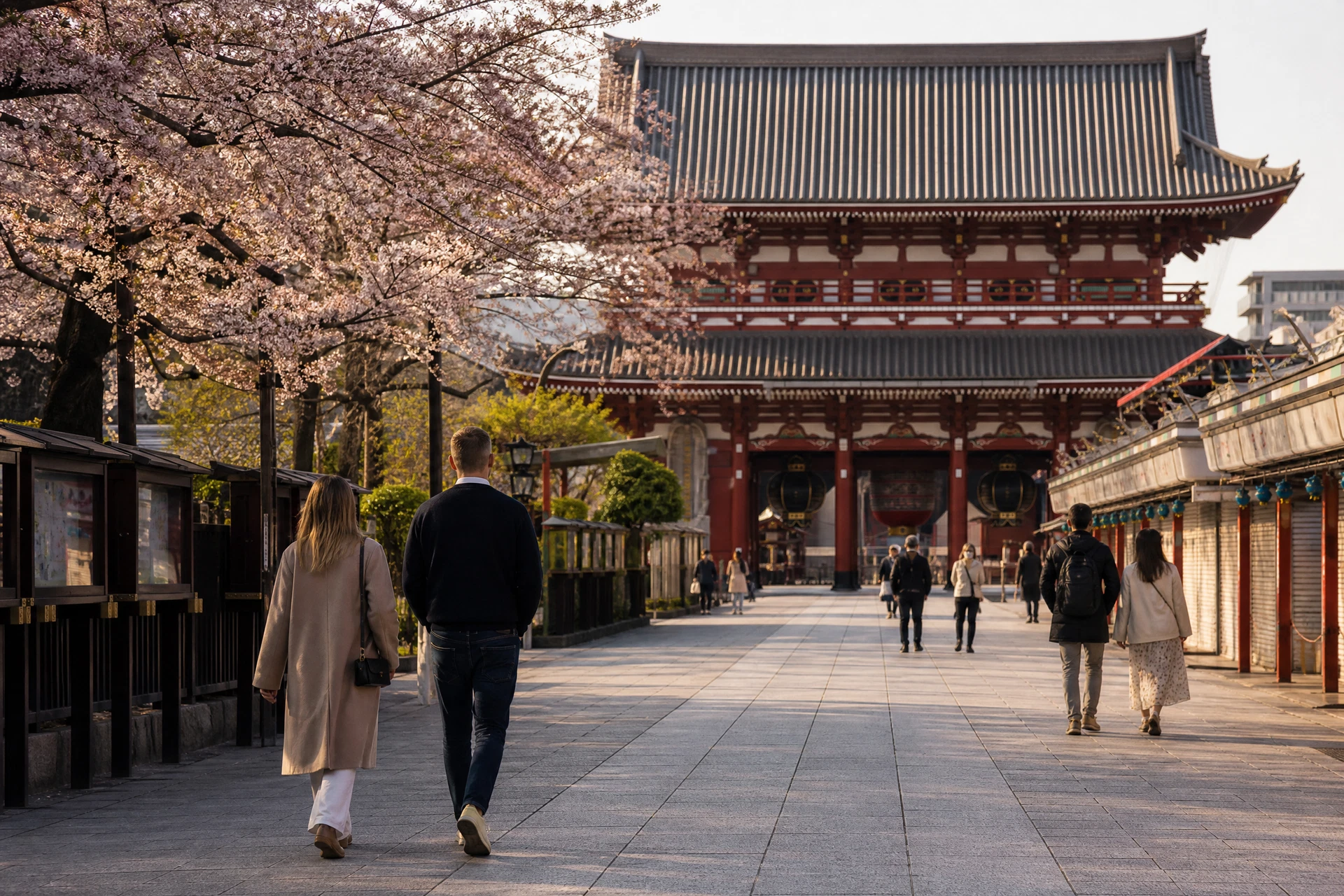
A relaxed five-day Tokyo itinerary is not a longer checklist. It is a way to give historic streets, contemporary districts, one unhurried meal, and the inevitable moments of discovery enough room to belong to the same trip.
This route groups nearby areas, keeps arrival and dinner timing realistic, and leaves the final day flexible. It is designed for first-time visitors who want a fuller Tokyo stay without turning it into a race across the city.
Before shaping a deeper stay, choose a base with the Tokyo hotel-area guide and compare the daily pacing in the three-, four-, and five-day Tokyo itinerary guide so the fifth day has room to be genuinely flexible.
1. What five days in Tokyo can do
Five full days are enough to understand Tokyo through several different lenses: traditional streets, fast-moving youth culture, central-city architecture, food, and the quieter places between the headline sights. The useful advantage is not simply an extra district. It is the freedom to keep a museum, garden, shopping stop, or dinner where it naturally fits rather than squeezing it into a gap.
Best for
First-time visitors who want Tokyo's major contrasts, value a slower hotel rhythm, and would rather leave room for a meaningful meal or a weather-aware change of plan than collect every landmark.
2. Day 1: Arrive gently and find your rhythm
Treat arrival day as a transition, not as a full sightseeing day. After airport formalities, luggage, hotel check-in, and a first look at the neighbourhood, a nearby walk and an uncomplicated dinner are usually enough. If you arrive early and feel energetic, choose one easy local anchor rather than crossing Tokyo.
This light beginning makes the next four days stronger. It also creates space for a delayed flight, a hotel-room reset, or a dinner reservation without forcing the rest of the itinerary to absorb the disruption.
3. Day 2: Historic east Tokyo
Build the first full day around east Tokyo: begin in Asakusa before the busiest hours, then choose one direction rather than trying to cover every nearby attraction. Sumida riverside, Ueno, Yanaka, a small museum, or a market-focused lunch can all give the day texture without creating a long transit chain.
The goal is contrast. After a temple-and-old-streets morning, choose an afternoon that is calmer or more contemporary rather than trying to reproduce the same atmosphere in another distant district.
4. Day 3: Meiji Jingu, style, and city energy
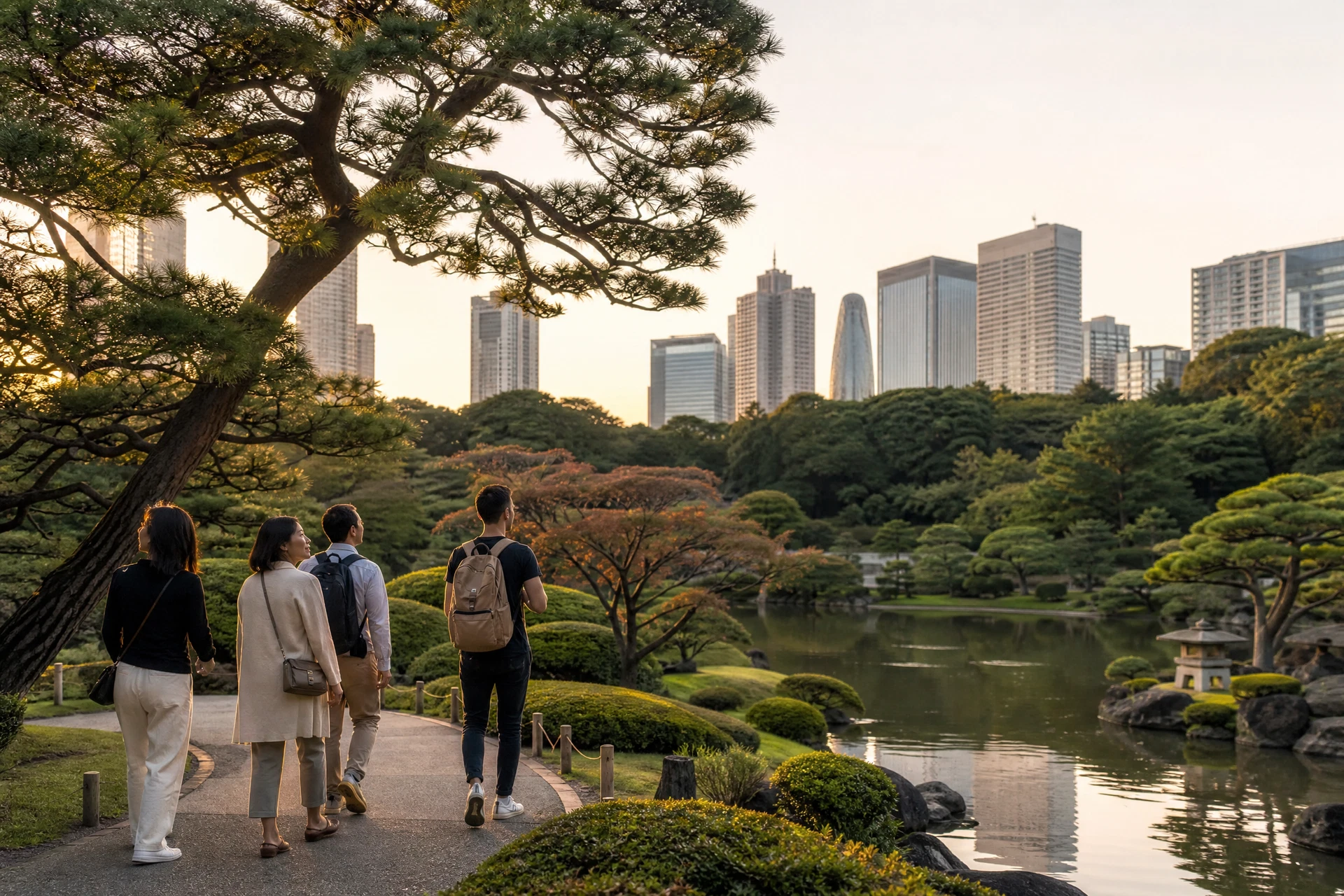
Give western Tokyo its own day. Meiji Jingu can offer a quiet opening before Harajuku, Omotesando, and Shibuya shift the mood toward design, shopping, and contemporary city life. Keep Shinjuku for the later part of the day if you want a skyline, a food hall, or an evening of small bars and bright streets.
This sequence is about walking through connected areas, not treating them as separate boxes to tick. A thoughtful lunch, a gallery, a café break, or a return to the hotel before dinner often adds more than a second distant stop.
5. Day 4: Central Tokyo, art, and a considered meal
Use the fourth day for central Tokyo: Tokyo Station and the Imperial Palace area, Nihonbashi or Ginza, and one culture or design stop that suits your interests. This is a good day for a timed restaurant reservation because the areas work well with an early evening finish.
If dining is important, reserve the meal first and build the nearby daytime route around it. The city feels more generous when dinner is the natural conclusion of the day, not a distant appointment that dictates every transfer.
6. Day 5: A flexible day for the Tokyo you discovered
Keep the fifth day partly open until the earlier days reveal what you want more of. It might become Odaiba and the waterfront, an art-focused Roppongi route, an afternoon of shopping, a return to a district you only sampled, or a nearby day trip if the weather and your energy make it appealing.
Flexibility is the luxury of five days. It lets the itinerary absorb rain, a closure, or an excellent restaurant suggestion without making the city feel like a problem to solve.
7. Choose a hotel base that protects the pace
A five-day stay benefits from a hotel area that supports the days you actually want to have. A lively station district can make late dinners and rail connections easy; a calmer east-side base can suit early cultural sightseeing; a central location can simplify a mixed itinerary. Read our Tokyo hotel-area guide before booking a base around assumptions that may not match your arrival airport or evening plans.
8. When a private driver changes the day
Public transport is excellent when the day stays within one connected part of Tokyo. A private driver can be valuable when you want to combine places that are less naturally connected, travel with luggage or shopping, protect a fixed dining reservation, or keep a mixed-age group comfortable. The point is not to remove walking; it is to remove the transfers that make a well-planned day feel rushed.
9. Official planning references
The JNTO Tokyo destination guide is a useful official starting point for the city's diverse districts and current destination ideas. Confirm opening hours, ticket conditions, weather, and transport details with official sources shortly before each day.
Build your custom route
Want five days shaped around your own Tokyo?
Share your hotel area, dates, interests, travel party, and the experiences you do not want to miss. We can help build a private route with realistic daily pacing, transfers, and room for the city to surprise you.
Build your custom route