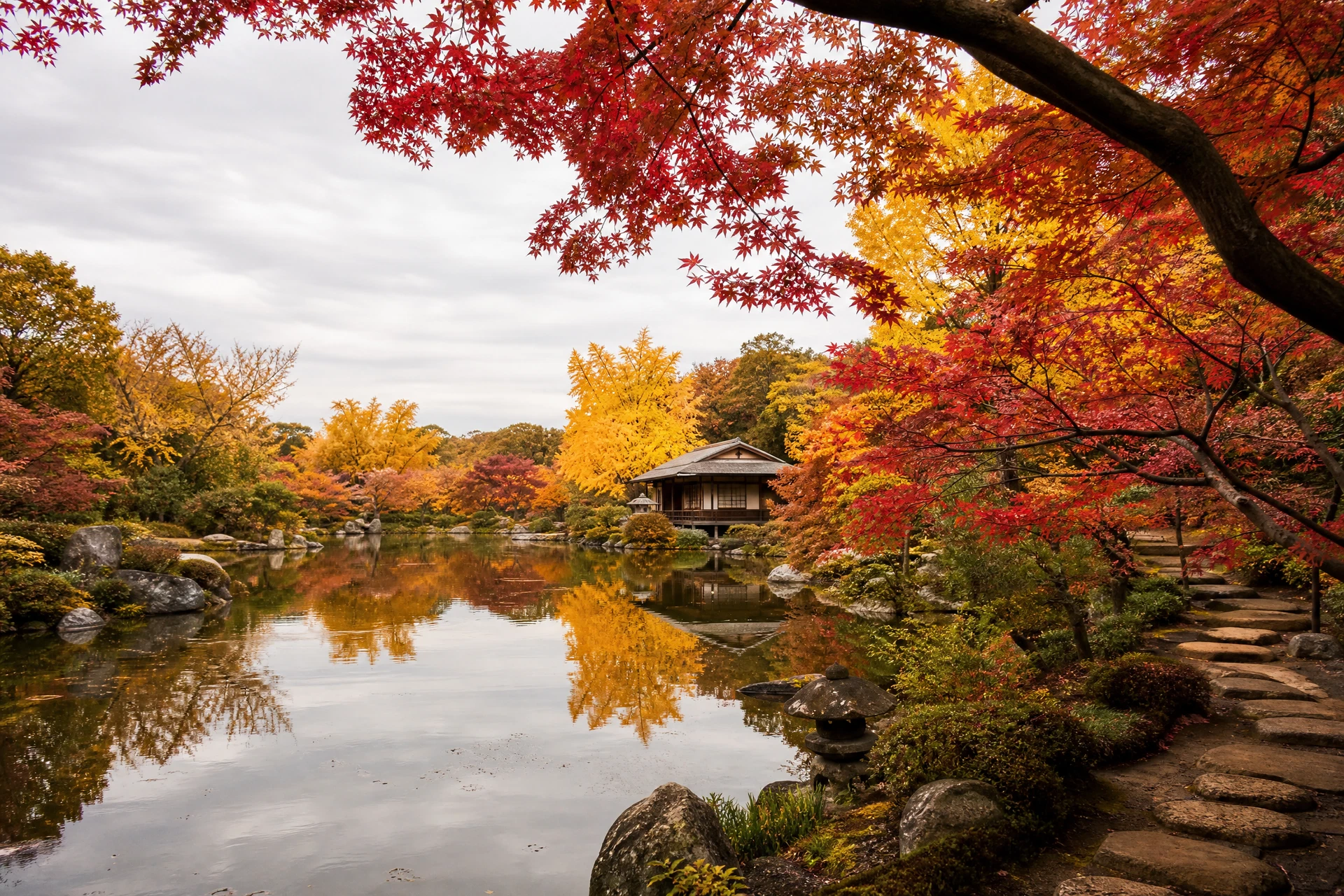
Tokyo's autumn is not a single sight to collect. It is a change in pace: a pond holding red maples, a ginkgo avenue in early light, a temple garden at a quieter hour, or a day when the city gives way to a mountain valley.
The most satisfying foliage days are built with room for changing colour, shifting temperatures, and the fact that the best-known places are shared with many other people. Choose a mood, give it time, and let one beautiful setting do more of the work.
For a different side of Tokyo's seasonal calendar, connect this plan with the Tokyo cherry blossom guide and the Tokyo to Hakone multi-day guide when a foliage-focused journey deserves more than one day.
1. Plan for a season that moves
GO TOKYO places Tokyo's usual autumn-leaf window around mid-November to early December, but that is a seasonal frame rather than a promise for any particular date [1]. A warm spell, wind, rain, and the particular trees at a venue can all shift the mood. Keep one primary foliage day and one alternate morning or afternoon available where your trip allows.
That flexibility matters more than trying to predict a perfect peak months ahead. Check current official forecasts, each garden's calendar, timed-entry rules, and any evening illumination details shortly before your visit. A private itinerary is at its best when it can respond to the season, not force the season to fit a fixed list.
2. Choose a garden for a slower view
Traditional gardens give autumn a composed frame. Rikugien, Koishikawa Korakuen, Hama-rikyu, and Ninomaru Garden at the Imperial Palace each offer a different relationship between water, paths, maples, ginkgo, and the surrounding city [2]. Choose one rather than trying to make several into quick photo stops.
3. Pair temples, shrines, and city foliage
Autumn is especially rewarding when foliage is one layer of a cultural day, not the whole purpose of it. A shrine approach, temple gate, museum collection, tea stop, or neighbourhood lunch gives the leaves a context and gives you a comfortable alternative if the weather changes.
Start early when possible, especially for widely photographed spots. Respect local signage, preserve shared paths, and avoid treating quiet religious grounds as a set. The best photographs tend to arrive when you slow down enough to notice where the season meets the place.
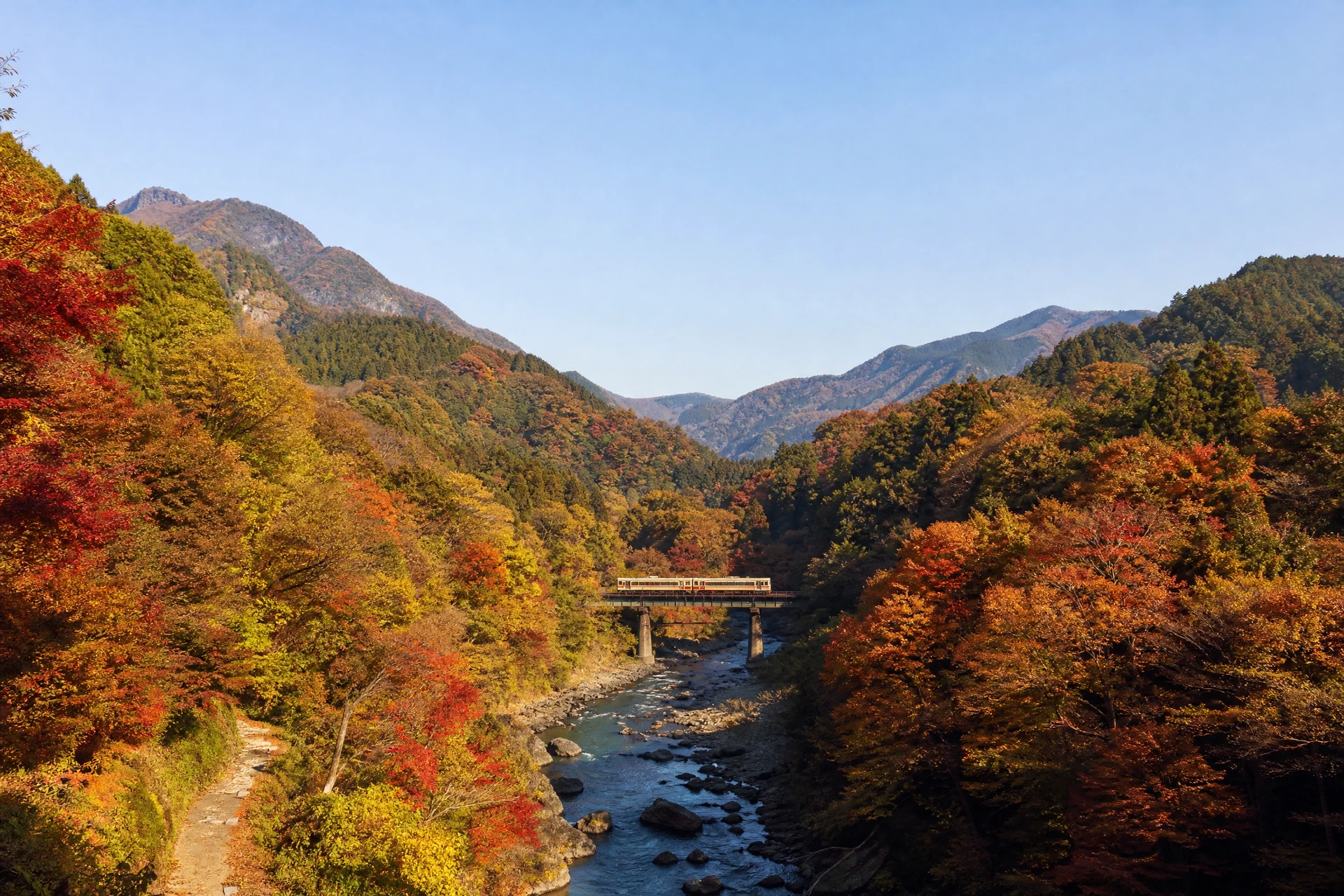
4. Make one scenic day trip the destination
When you want a more expansive autumn landscape, choose a single direction. GO TOKYO highlights Mt. Takao, Mt. Mitake, Akigawa Valley, and Lake Okutama for nearby mountain and lake scenery [3]. These are not interchangeable add-ons to a central Tokyo morning; each benefits from an unhurried start and realistic walking expectations.
A private car can be particularly useful for groups combining a station arrival, a modest walk, a countryside lunch, a riverside or lakeside pause, and a return to the hotel without repeatedly changing lines. Share your preferred landscape, walking comfort, and whether onsen time or photography matters most, then keep the sequence simple.
5. Use timing to soften the crowds
There is no secret crowd-free version of a famous autumn view. There are better trade-offs. GO TOKYO recommends weekdays and mornings where possible because weekends and holidays are especially busy [4]. Arrive with a clear first stop, walk before midday, and have an indoor lunch, museum, or hotel reset ready for the busiest hours.
Avoid packing several famous stops into one map. One garden and one nearby cultural or dining anchor will usually feel richer than a cross-city itinerary built around five photographs.
6. Dress for a day that changes temperature
Tokyo autumn days can feel mild while mornings and evenings turn cool. GO TOKYO and JNTO both recommend layers, and comfortable walking shoes make a substantial difference on garden paths and day-trip trails [5]. Carry water, a compact rain layer, and enough charge for current maps and transport information.
Before a longer outing, check venue notices and the Japan Meteorological Agency for current weather and warnings. If conditions move, use the city's museums, food halls, cafés, and hotels as part of the itinerary—not as an afterthought.
7. When a private car changes an autumn day
A private car is most helpful when the day has several elements that do not connect naturally by rail: a garden opening time, a countryside route, mobility considerations, shopping bags, a lunch reservation, or a dusk view. It is not about adding more stops. It is about protecting the pace that makes autumn feel restorative.
Tell us your dates, hotel, foliage priorities, group, walking comfort, and whether you prefer gardens, heritage, ginkgo avenues, or a scenic day trip. We can shape a private route around current conditions and the rhythm you want.
8. Official references before you go
Consult GO TOKYO's current Autumn Leaves Forecast and Tokyo Autumn Guide, then verify the individual garden, temple, trail, or event before you go. Use the Japan Meteorological Agency for current weather and warnings.
Autumn at your pace
Would you like a Tokyo autumn day shaped around the foliage?
Tell us your dates, hotel, group, preferred scenery, walking comfort, and whether you want a garden day or a scenic escape beyond the city. We can help plan a private route with the right amount of space around the season.
Plan a private autumn day