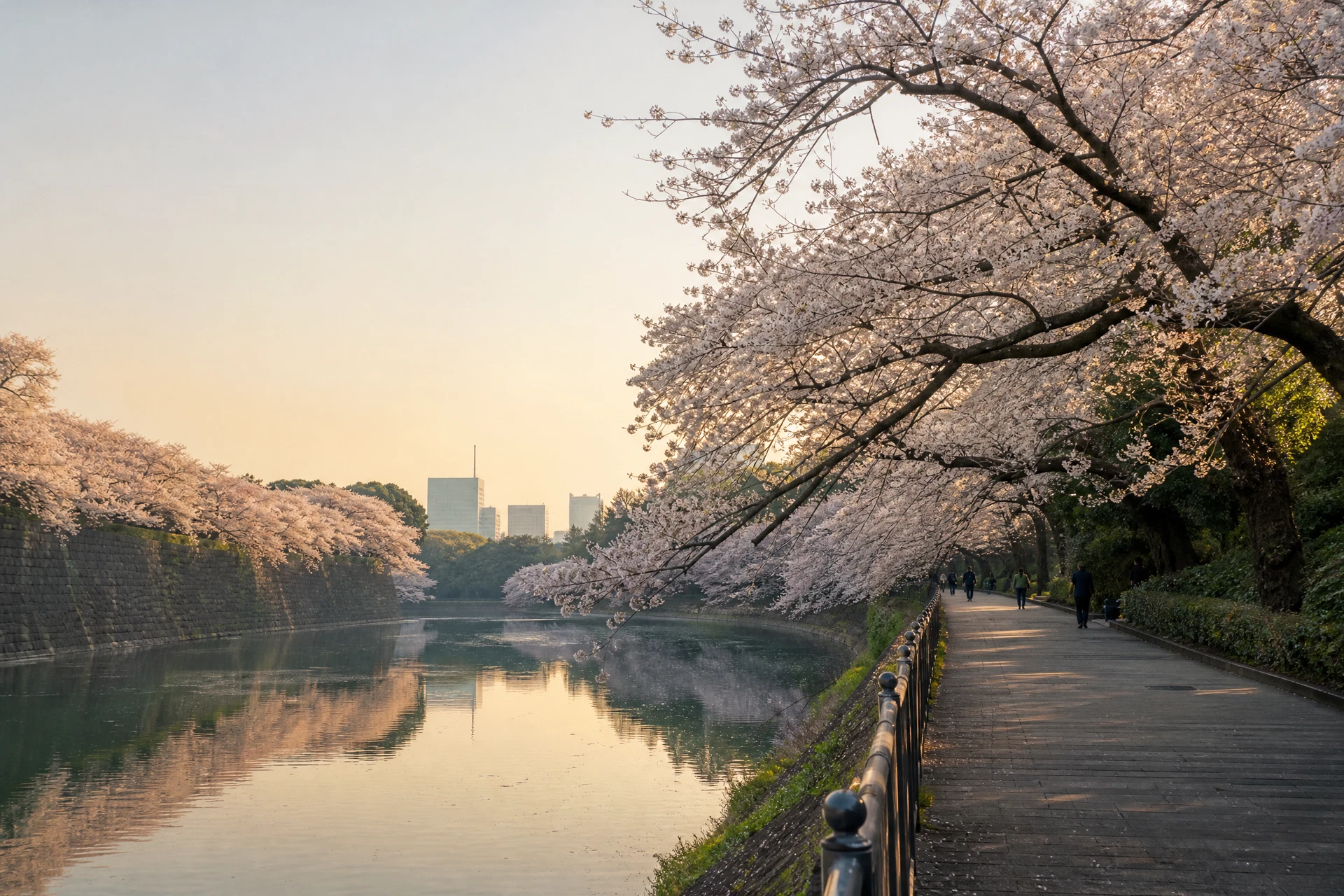
Tokyo in blossom season is at its best when the plan has enough air in it. The flowers are brief, the forecast moves, and the famous places can be intense. But the right route can still feel remarkably quiet: a moat before breakfast, a garden after lunch, or illuminated branches once the daytime crowd has thinned.
This is not a promise of empty parks. It is a guide to choosing a mood, reading the timing, and making practical decisions that give you a more composed view of spring in Tokyo.
For a second seasonal perspective, compare this period with the Tokyo autumn leaves guide and use the Tokyo with children guide if your viewing day needs a more relaxed pace.
1. Plan for a moving season, not a fixed date
Different cherry varieties open at different moments, and weather changes the pace. GO TOKYO notes that most blossoms in Tokyo generally peak from late March to early April and may last only a week or two [1]. Treat that as a seasonal frame, not a guarantee for a particular morning.
The strongest plan is a date window plus alternatives. Choose one main sakura day, keep a second morning or evening open, and save the official forecast and venue pages close to departure. If petals are early, late, or just beginning, the experience can still be beautiful when your itinerary has room to respond.
2. Choose the kind of sakura experience you want
Do not begin with a list of every famous place. Begin with the atmosphere you want. A broad park and social hanami scene, a moat-side walk, a river reflection, a formal garden, a neighbourhood dinner under lights, and a museum-plus-blossom day are different experiences. One carefully chosen setting will usually feel richer than trying to cross the city for five photographs.
3. A practical strategy for avoiding the crowds
Crowd avoidance is not about finding a secret that never changes. It is about making better trade-offs. Popular places are popular for a reason, and GO TOKYO specifically notes that Ueno and Nakameguro draw large crowds in season [2]. Visit them if they matter to you—just do so with a defined arrival time, an exit plan, and no assumption that a midday weekend will feel quiet.
The most reliable levers are simple: go early, choose one primary zone, use weekdays where possible, walk a little beyond the station-side entrance, and move your longest outdoor segment out of the middle of the day. Keep a nearby museum, café, department store, or hotel reset in reserve. That is not a compromise; it is how a spring day retains its grace.
4. Morning routes: the calmest way to begin
For many travellers, morning is the single best crowd-management tool. Begin with an early breakfast close to your first viewing area, then walk before group tour timing and picnic activity change the mood. A private driver is particularly useful here when the plan connects a moat, garden, or riverside path with a later museum or lunch reservation without requiring a crowded station transfer at the busiest time.
Keep the morning realistic. Photograph the light, take the walk, then leave before the experience becomes a queue. A blossom day should not be judged by the number of locations pinned on a map.
5. Evening routes: yozakura with a plan
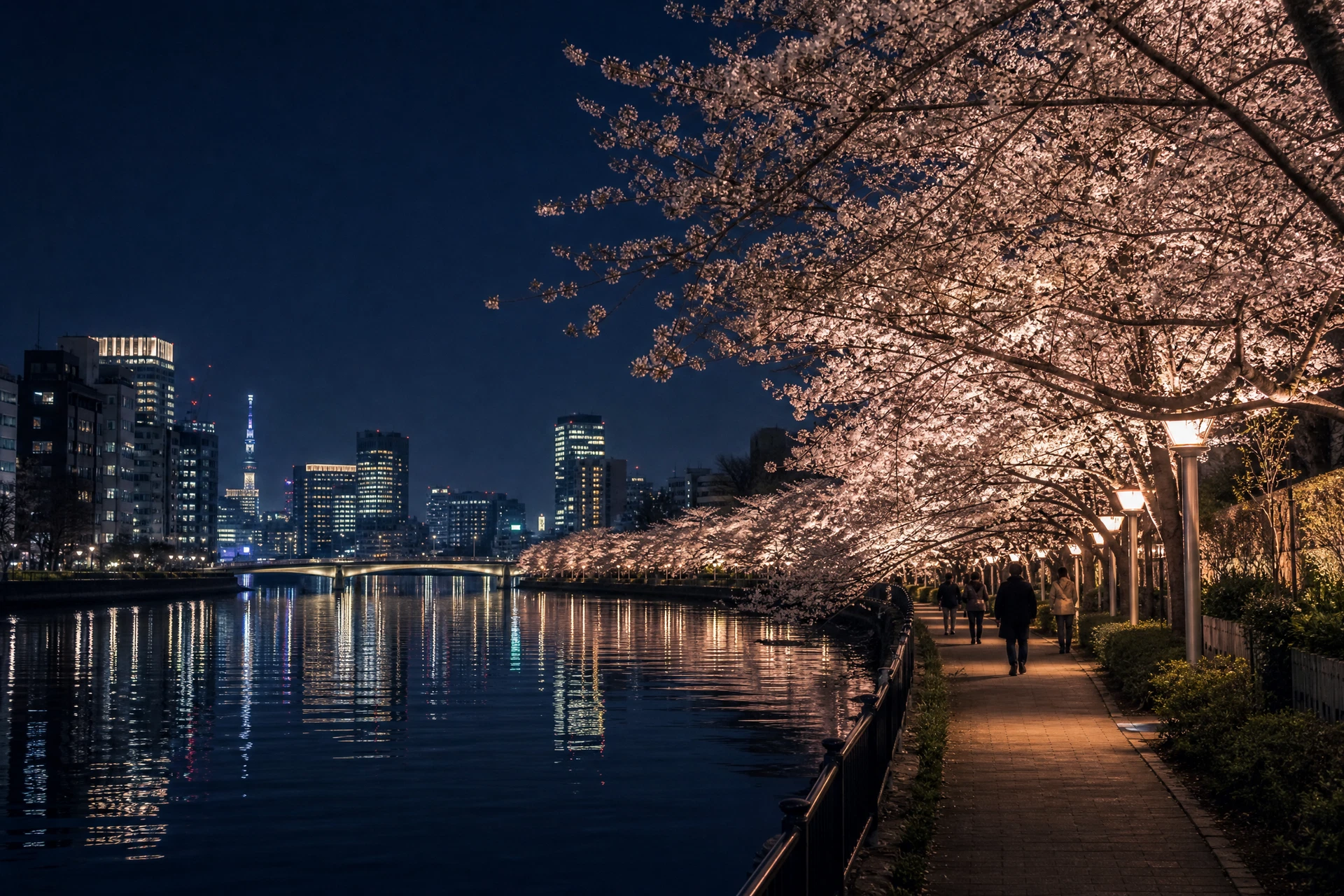
Yozakura—night cherry blossoms—can turn a familiar place into a different kind of scene. GO TOKYO highlights illuminated options around Chidorigafuchi, Nihonbashi, Nakameguro, Rikugien, Sumida, and Inokashira, but arrangements, tickets, and dates change each year [3]. Check the current official venue guidance before making dinner or transport commitments.
A good evening sequence is simple: a late afternoon indoor stop, a short blossom walk at dusk, then a reservation in the same area or an easy return to the hotel. That approach makes the lights feel like an occasion rather than another long transfer at the end of an already full day.
6. Weather, petals, and flexible planning
Rain, wind, and temperature can change the best plan quickly. Watch the current forecast, park notices, transport status, and any weather warnings through the Japan Meteorological Agency and local official pages [4]. Carry a compact rain layer, shoes that handle damp paths, and a small amount of patience for changing light.
Falling petals are not a failed day. The peak changes character as it passes: buds, full canopy, and petals on water each offer a distinct Tokyo spring image. Flexible planning lets you enjoy what the city is giving rather than chase a forecast that has already moved on.
7. A crowd-aware private Tokyo day
A private blossom day works best when it protects rhythm rather than adds stops. Start early at one outdoor anchor, move to an indoor cultural or shopping break through the highest-pressure period, rest at the hotel if needed, then choose either a second short outdoor walk or a dusk viewing close to dinner. That framework gives families, photographers, and travellers with limited mobility more control over the day.
Tell us your travel dates, hotel, walking comfort, preferred blossom setting, dining plans, and whether you value photography, gardens, neighbourhood atmosphere, or a calm first experience. We can shape a private route around current conditions and the pace you want—without treating the city as a race.
8. Hanami etiquette and practical comfort
Cherry blossoms are part of everyday life for Tokyo residents as well as a travel highlight. Follow local signage, keep shared paths open, use only designated picnic areas, carry away your waste, and respect any restrictions around alcohol, tripods, drones, pets, or reserved spaces. A quiet photograph can be as meaningful as a picnic; choose the format that matches the place.
Bring layers for changing spring temperatures, a portable charger for maps and cameras, and a plan for restrooms before long riverside walks. Small practical choices are what keep the attention where it belongs: on the flowers and the people with whom you are seeing them.
9. Official references before you go
Use GO TOKYO's current cherry blossom guide and yozakura guide for live seasonal ideas, then verify each park, garden, event, or boat operator's own current access and ticket information. Check the Japan Meteorological Agency for weather and warnings close to your date.
Spring at your pace
Would you like a Tokyo blossom day shaped around your dates?
Tell us when you are travelling, where you are staying, who is joining you, and the kind of spring moment you hope to have. We can help plan a private route, a calm arrival, and a considered dining or evening finish.
Plan a private spring day