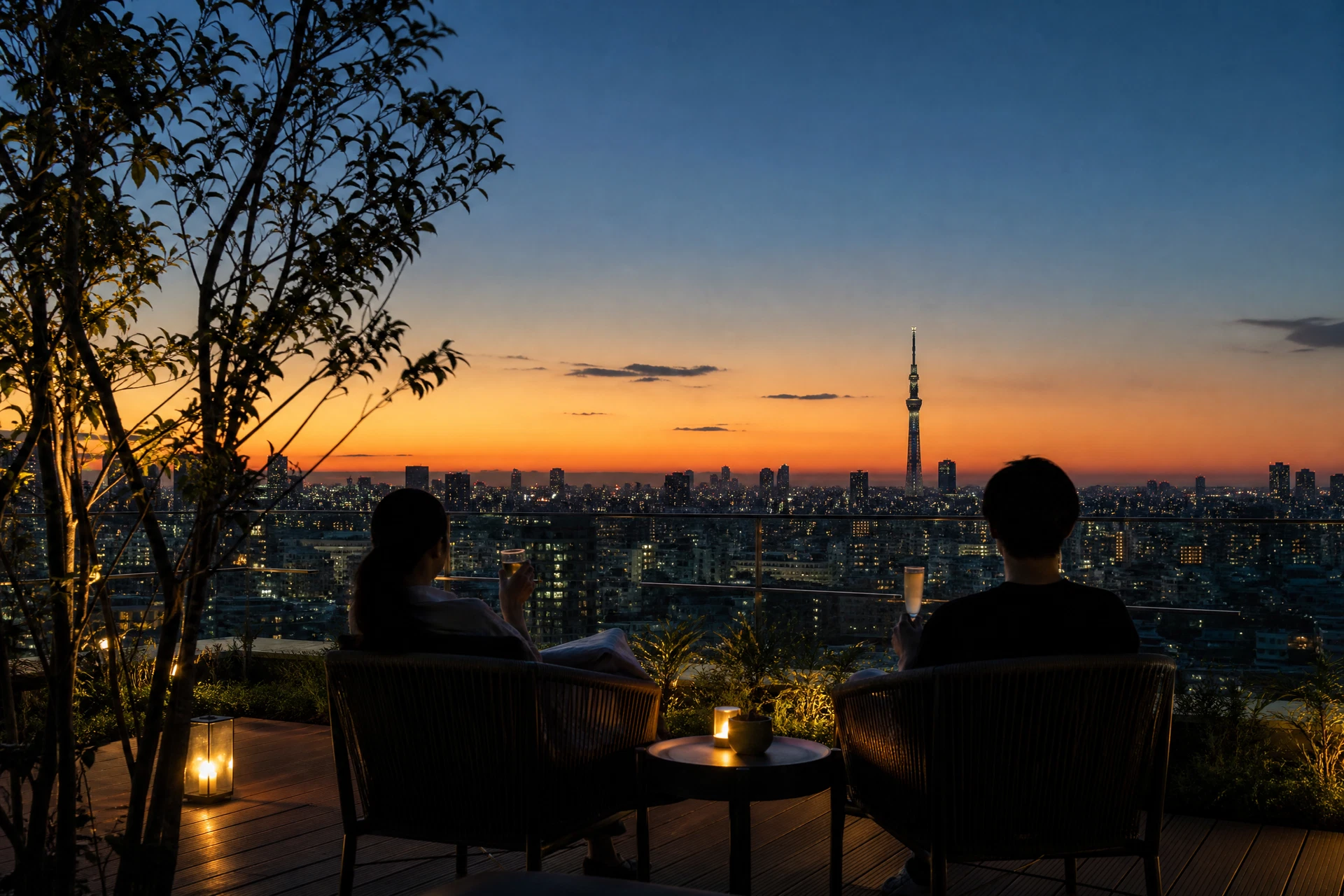
Summer in Tokyo does not require a smaller trip. It asks for a different composition: let the city open early, move culture into the cooled middle hours, rest without apology, and return to the street when the evening becomes a destination of its own.
This guide is for travellers who want a full day without treating heat, rain, or cross-city movement as an endurance test. The most satisfying summer itineraries are those that preserve energy for the moments worth seeing.
If your group benefits from a slower or more weather-aware rhythm, read the senior travellers guide and the Tokyo winter guide for a useful contrast in seasonal pacing.
1. Start with a heat-aware rhythm
GO TOKYO describes summer as generally running from June to August, with hot and humid conditions. Its practical advice is clear: hydrate, maintain sodium levels, avoid direct sun in the middle of the day, and place activities in the early morning or late afternoon [1]. Those are not minor adjustments; they are the architecture of a comfortable day.
Put your most exposed walking, shrine grounds, market wander, or garden time early. Give the centre of the day a roof and a seat. Reserve your most atmospheric outdoor view for dusk. By moving the right things into the right light, Tokyo feels more spacious and your itinerary remains enjoyable even when the temperature rises.
2. Use the morning for outdoor Tokyo
Choose one outdoor anchor, not three. An early Asakusa walk, a temple garden, a quiet river edge, the Imperial Palace area, or a neighbourhood coffee stop can create a real sense of the city before the heat becomes the main story. Begin close to your hotel where possible, and do not over-engineer the first hours with a long train journey.
A lightweight bag with water, a small towel, sun protection, a portable charger, and breathable layers goes a long way. Check the day's forecast and weather notices before leaving; in periods of severe heat or storm activity, comfort should take priority over a fixed sightseeing list.
3. Make indoor culture the centre of the day
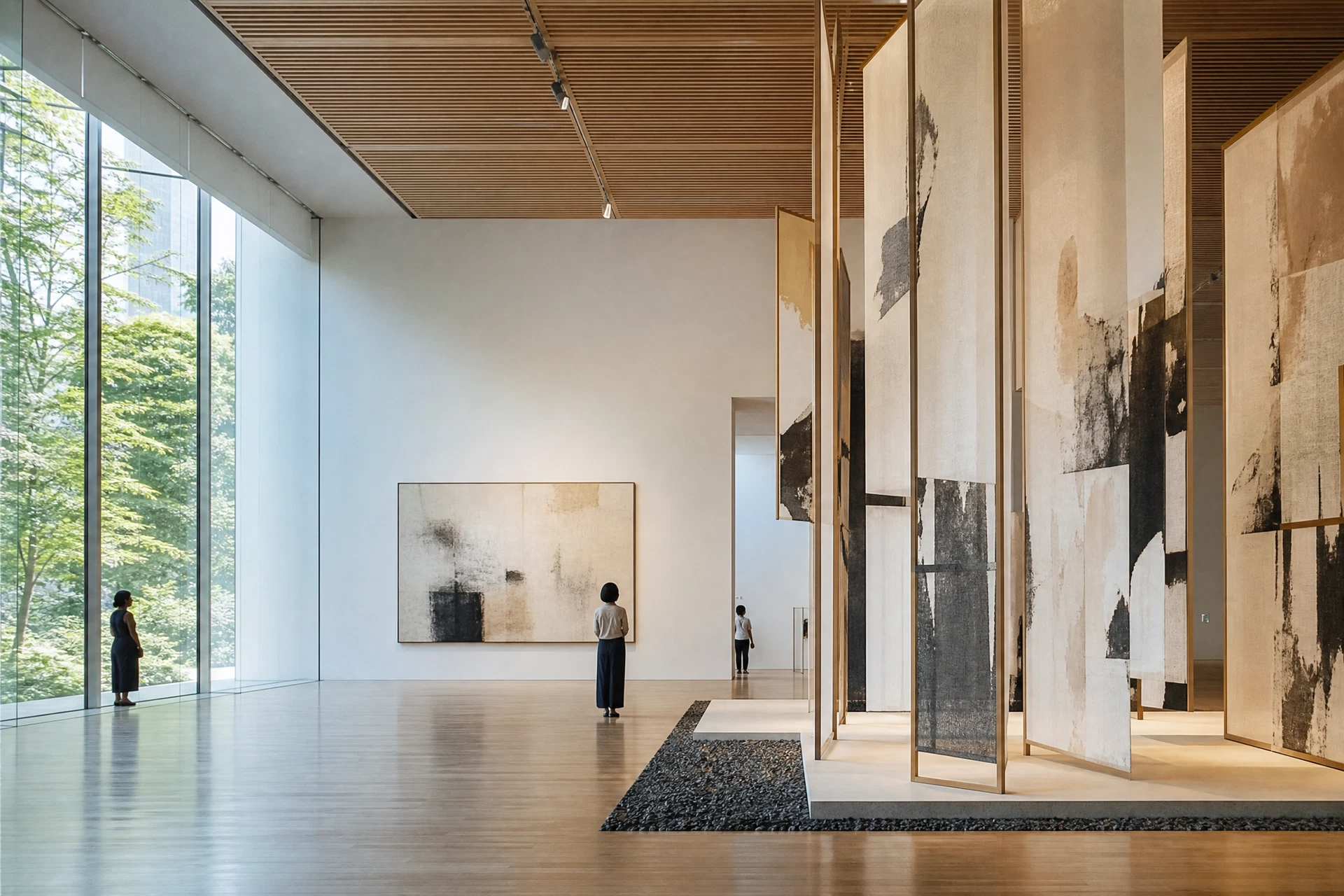
The warmest part of the day is an invitation to see another Tokyo. Museums, galleries, department stores, food halls, theatres, design spaces, and contemporary experiences can give the itinerary depth while offering climate-controlled comfort. Choose one or two places that you care about rather than treating every indoor attraction as a backup plan.
Pair by geography. Ueno can connect museums and a relaxed lunch; Roppongi can connect art, architecture, and a later view; Ginza and Marunouchi can combine galleries, food halls, shopping, and polished cafés; Toyosu or Odaiba can make room for immersive culture and waterfront evening air. Current opening hours and timed-entry policies should always be checked on the venue's official site.
4. Build in a genuine reset
In summer, returning to the hotel is not lost time. A shower, a change of clothes, an hour in a quiet lobby, or a brief swim if your hotel offers it can transform the evening. GO TOKYO also notes that a light layer can be useful in strongly cooled trains and stores [1].
Plan your reset before you need it. A travel day feels far more luxurious when dinner, a view, or a summer festival begins with energy still available, rather than as the final obligation of an overheated afternoon.
5. Save views, dining, and waterfront for evening
Tokyo's summer evenings are not merely a cooler substitute for daytime. They have their own character: rooftop and high-floor views, riverside walks, waterfront dining, department-store beer gardens, seasonal desserts, Bon dancing, and festival atmosphere. GO TOKYO's current summer guide highlights fireworks and neighbourhood festivals across July and August, but dates and access should be confirmed afresh each year [1].
Build the evening around one thing you want to remember: a carefully chosen dinner, a skyline view, an event, or a calm waterfront promenade. Keep the route short and the return plan easy. That is how an evening becomes restorative rather than another complicated transfer.
6. Keep a rain-ready alternative
Summer also means changeable conditions. Keep one indoor alternative within the same district as your primary plan, and save the current weather, warning, and rail information before you leave the hotel. The Japan Meteorological Agency is the right reference for live weather and warnings [2].
A rain-ready day need not feel like a diminished day. Tokyo's covered streets, department stores, cafés, underground connections, museums, and food culture often make a wet afternoon surprisingly satisfying when you already know where you are going next.
7. Comfortable itinerary ideas for one full day
8. When a private car changes a summer day
A private car is not necessary for every Tokyo afternoon, but it can be particularly helpful when you want to connect several non-adjacent air-conditioned stops, travel with children or older family members, carry shopping, keep a dinner reservation on time, or avoid repeated outdoor station-to-station walks. It also gives a group a reliable place to regroup between different parts of the day.
Tell us your hotel area, dates, interests, walking comfort, preferred cultural stops, and evening plans. We can help design a summer route that is realistic for the conditions while still feeling distinctly Tokyo.
9. Official references before you go
Consult the current GO TOKYO Summer Guide for seasonal ideas and events, then confirm each festival, museum, observatory, and restaurant through its own official page. Use the Japan Meteorological Agency for current weather and warnings, and adjust the day when conditions ask you to.
Summer at your pace
Would you like a more comfortable Tokyo summer itinerary?
Tell us your dates, hotel, interests, group, and preferred pace. We can help shape a cool, thoughtful private day with cultural stops, a meaningful evening, and room to adapt to the weather.
Plan a comfortable summer day