A Michelin star can point you toward a remarkable meal. It cannot, on its own, tell you whether a counter is right for your parents, whether a tasting menu will suit an important client dinner, or whether a particular night should feel ceremonial, relaxed, or quietly adventurous.
Tokyo gives you an extraordinary number of choices—and that abundance makes discernment more valuable. This guide helps international visitors move from a broad Michelin search to a restaurant experience that truly fits the people at the table. We can also recommend options and assist with reservation requests once we understand what matters to you.
If you are narrowing the experience rather than the rating, compare the Tokyo sushi guide with the Tokyo kaiseki guide before choosing the style of meal that suits the occasion.
1. Start with fit, not a star count
When visitors say they want “the best Michelin restaurant in Tokyo,” what they usually mean is that they want one evening to feel unmistakably special. The right answer may be an exacting sushi counter, a deeply seasonal kaiseki meal, a contemporary French tasting menu, or a more relaxed restaurant where conversation can carry the evening. A star is a useful signal of cooking; it is not a complete brief for hospitality.
Begin by deciding what success looks like. Is this your first serious Japanese meal? A private celebration? A thank-you dinner for a business guest? A meal with teenagers, parents, or colleagues who have different appetites and comfort levels? Then consider how the restaurant sits inside your day: the district, arrival time, travel distance, dress, and energy you will have left after sightseeing all shape the experience.
2. How to read the MICHELIN Guide in Tokyo
The live MICHELIN Guide Tokyo directory is an excellent research tool because it lets you narrow by distinction, cuisine, price, special diet, setting, and practical services. It distinguishes three stars as exceptional cuisine, two stars as excellent cooking, one star as high quality cooking, Bib Gourmand as good quality and good value cooking, and Selected Restaurants as good cooking [1].
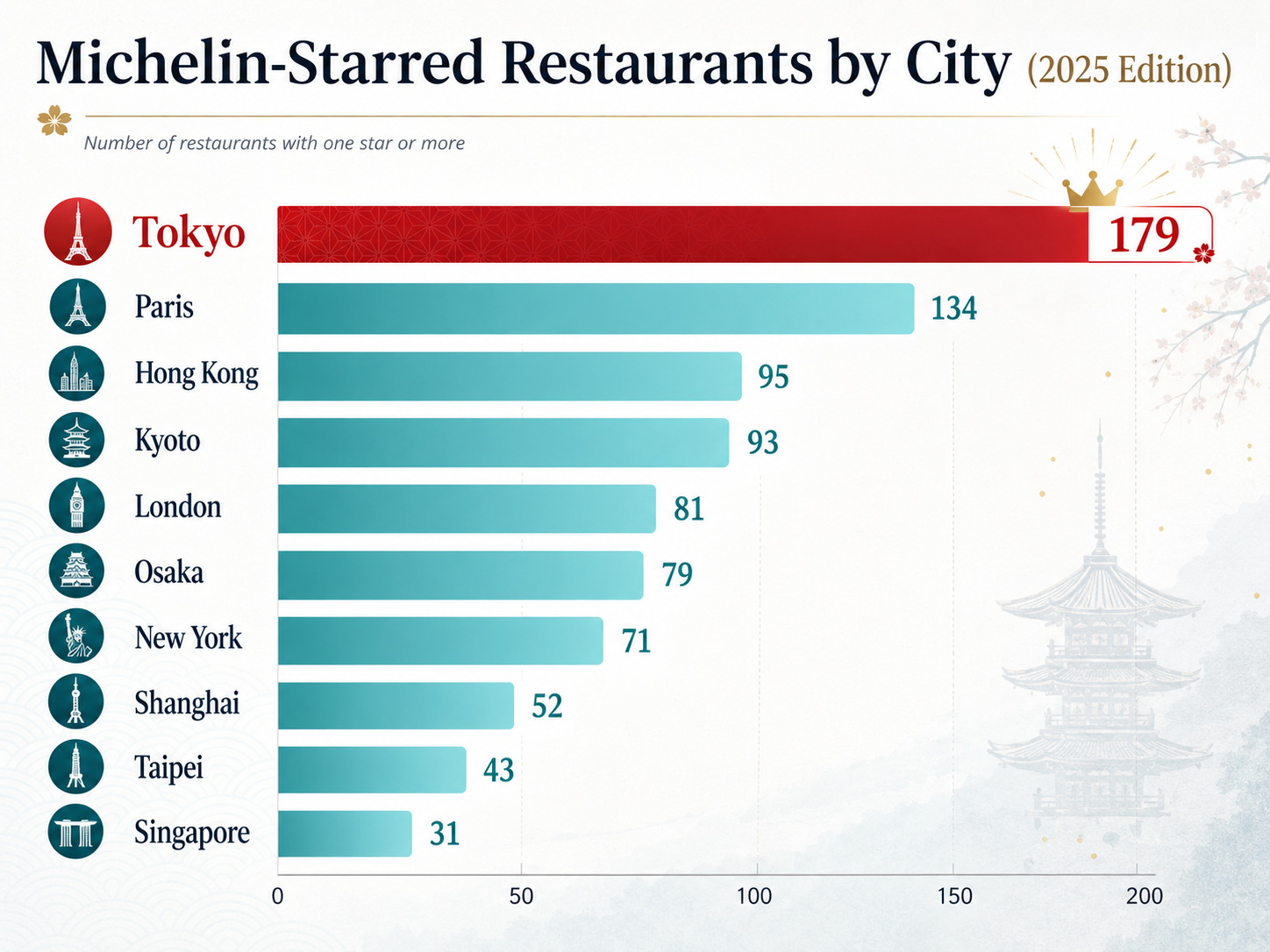
The supplied 2025 comparison chart captures the scale of Tokyo's dining landscape in that edition. Michelin's 2025 Tokyo announcement recorded 507 recommended restaurants, including 170 starred establishments and 110 Bib Gourmand selections, across 34 cuisine types [2]. Treat those figures as a dated snapshot, and use the live directory for current listings and availability.
3. Choose your sushi experience with care
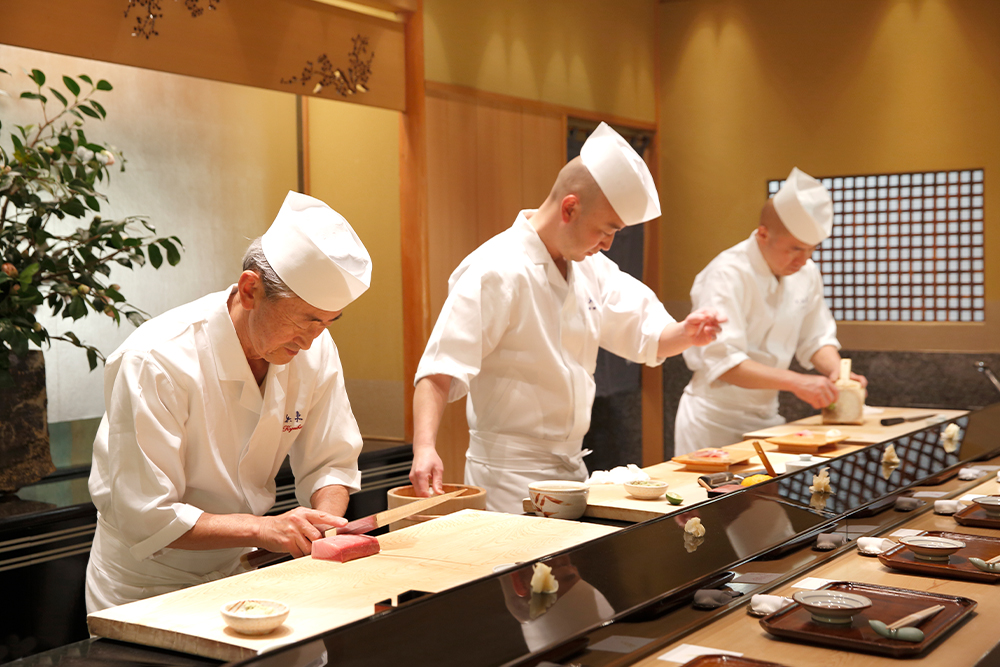
Sushi is often the first format visitors associate with a Tokyo Michelin meal, but “sushi” still leaves many decisions open. An omakase counter can be intimate, fast-moving, formal, playful, traditional, or modern. A restaurant may be ideal for a focused solo guest yet less suitable for a group that wants extended conversation. Some counters have a fixed sequence and a precise rhythm; others are more relaxed at lunch or better suited to first-time guests.
Before booking, decide whether the priority is craft at the counter, a familiar setting for a special guest, an accessible introduction to omakase, or a celebratory experience with a more flexible pace. Share allergies early—particularly shellfish—and be candid about children, language preferences, and whether your group is comfortable with a chef-led format. The more accurate the brief, the more meaningful the recommendation.
4. Understand the pace of kaiseki and seasonal cuisine
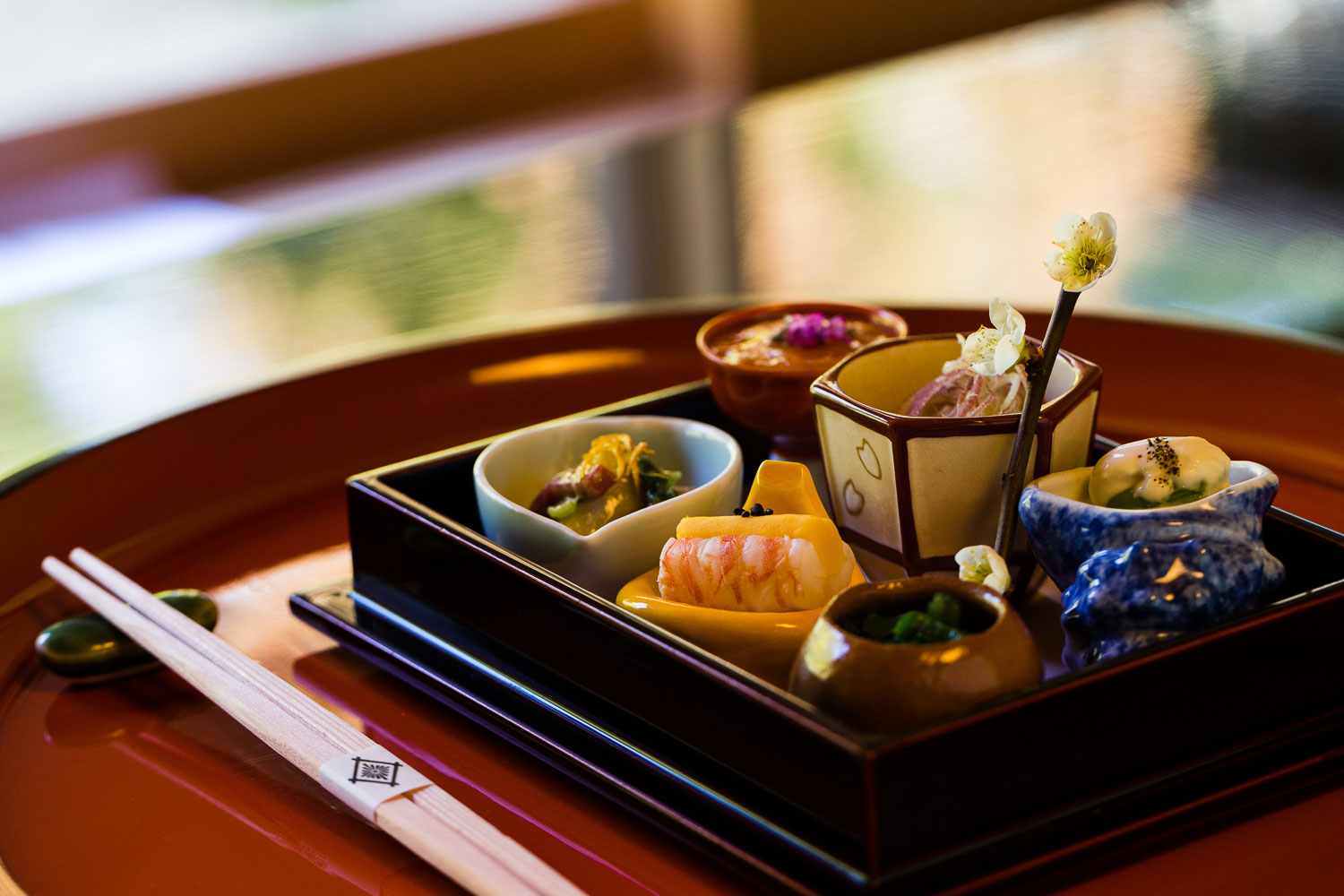
Kaiseki is less about a single signature dish than a progression: seasonality, ceramics, texture, temperature, broth, and the quiet movement from one course to the next. It can be ideal for guests who want a sense of Japanese season and ceremony, or for a business dinner where a private room and deliberate service matter as much as the menu.
The commitment is also different. A multi-course meal takes time, often involves a clearer level of formality, and may be most rewarding when you leave a calm arrival window before the reservation. If you have a packed sightseeing day, a refined lunch can sometimes deliver the same care with more energy and more room in the evening.
5. Match cuisine, setting, and occasion
Tokyo's Michelin landscape reaches well beyond sushi and kaiseki. Tempura offers focus and lightness at the counter. Yakitori can make a sophisticated but less ceremonious evening. French, Italian, Chinese, and innovative restaurants may offer a natural bridge for guests who want Japanese ingredients in a more familiar service structure. Bib Gourmand and selected addresses can also be the most honest answer when the goal is simply a remarkable, well-judged meal without the pressure of a grand occasion.
6. Make the budget and schedule work for you
For an important meal, budget is more than the menu price. Consider beverages, service charges where applicable, transport, deposits, cancellation terms, and whether lunch might offer a better fit for your party. A dining plan should also respect the rest of your trip. A 6:00 p.m. reservation in Ginza after an afternoon in Asakusa is easy to enjoy with a well-planned transfer; the same booking after a rushed cross-city shopping day may not be.
This is where a private driver can make a dining itinerary feel composed. We can connect a restaurant with the right district, store purchases securely during the day, plan a gracious arrival, and arrange a direct return after dinner. The table becomes a highlight rather than a logistical problem to solve.
7. Approach reservations with the right information
The most sought-after restaurants may have strict lead times, deposits, cancellation conditions, fixed seatings, or policies that change by season. A reservation request is not a guarantee of a particular table, and it should never be treated as one. The right approach is to be precise, flexible, and respectful of the restaurant's own rules.
When you ask for help, tell us the exact date range, party size, preferred meal time, cuisine, budget, hotel area, allergies, children or accessibility needs, and what the occasion means to you. If you have a first choice, give us one or two alternatives. That gives us room to recommend intelligently rather than simply report that a famous name is unavailable.
8. How our restaurant consultation can help
NipponMe can help you narrow the field before a reservation request is made. Our approach is shaped by experience hosting important overseas guests during a career at a major Japanese trading company, where the success of a dinner depended on every detail: the welcome, privacy, flow of conversation, dietary comfort, and the journey to and from the table.
We can recommend from both well-known and less obvious addresses according to your exact brief, then assist with reservation requests for the option you choose. We will always be clear about availability and the restaurant's own policies. The aim is not a generic list of prestigious names; it is a Tokyo meal that feels exactly right for you.
9. Useful official references
For current restaurant distinctions and filters, use the MICHELIN Guide Tokyo directory. For context on the 2025 edition, including the distinction counts shown in the supplied chart, see the official 2025 Tokyo selection announcement.
Tokyo restaurant consultation
Would you like us to help choose—and request—the right table?
Tell us your dates, party, preferred cuisine, budget, hotel area, and the kind of experience you hope to have. We will recommend thoughtful options and assist with reservation requests for your selected restaurant.
Request a restaurant consultation