Atami is close enough to Tokyo to look like an easy day trip. That convenience is real, but it can obscure what the town does best: the gradual transition from city to coast, an unhurried ryokan evening, and time to connect hot springs, sea views, shrines, gardens, and art in one coherent stay.
A two-night, three-day plan gives each of those elements room to breathe. Visit Atami frames the city as a coastal destination of hot springs, natural beauty, and cultural experiences, while JNTO places it less than an hour from Tokyo by the Tokaido Shinkansen and at the gateway to the Izu Peninsula [1] [2]. It is a small change in schedule that makes Atami feel like a destination rather than a break between Tokyo and somewhere else.
To compare a coastal onsen stay with another Tokyo-side escape, read the Tokyo to Hakone multi-day guide and the Tokyo to Yokohama day-trip guide while you decide the shape of the journey.
1. Why Atami deserves more than a day
Atami brings together experiences that are easy to reach but difficult to appreciate when compressed: a sea-front walk, a room with a view, an evening bath, a historic shrine, and a hilltop museum. None demands a dramatic journey from the station; their value comes from being allowed to exist in the same relaxed rhythm.
JNTO describes Atami as a long-established hot-spring town that has also become a place for museum lovers, Japanese-culture enthusiasts, and ocean-minded travellers [2]. Staying two nights lets you take that variety seriously. One day can remain close to town and the sea; another can be built around culture and a slower return to your inn; the final morning stays available for whatever the weather, your group, or the town itself suggests.
2. Arriving from Tokyo and settling into the coast
Begin from Tokyo in the morning or near midday, with enough margin to make arrival part of the experience. The Tokaido Shinkansen creates a very direct connection, and Atami Station is the natural point from which to choose a hotel, ryokan, waterfront walk, or local bus [1]. If you arrive with luggage, take that practical step first: check in, arrange baggage storage, or go directly to your accommodation before beginning the town.
For a public-transport trip, a central base keeps the first day simple. For a private charter, door-to-door pickup from a Tokyo hotel can make the change of pace smoother, especially with children, older relatives, or several bags. The important decision is not to fill every spare hour on arrival; it is to arrive early enough that your first view of the sea is not immediately followed by a race to return.
3. Day 1: Arrival, sea promenade, and ryokan check-in
Let the first afternoon belong to Atami's coastline. Start around the station, orient yourself, then move down toward the sea for a promenade, a café pause, or an easy seafood lunch. Visit Atami highlights Atami Sun Beach and its palm-lined waterfront among the city's accessible scenic experiences [1]. This is not a day to collect attractions; it is a chance to understand the scale of the bay and the way the town rises from it.
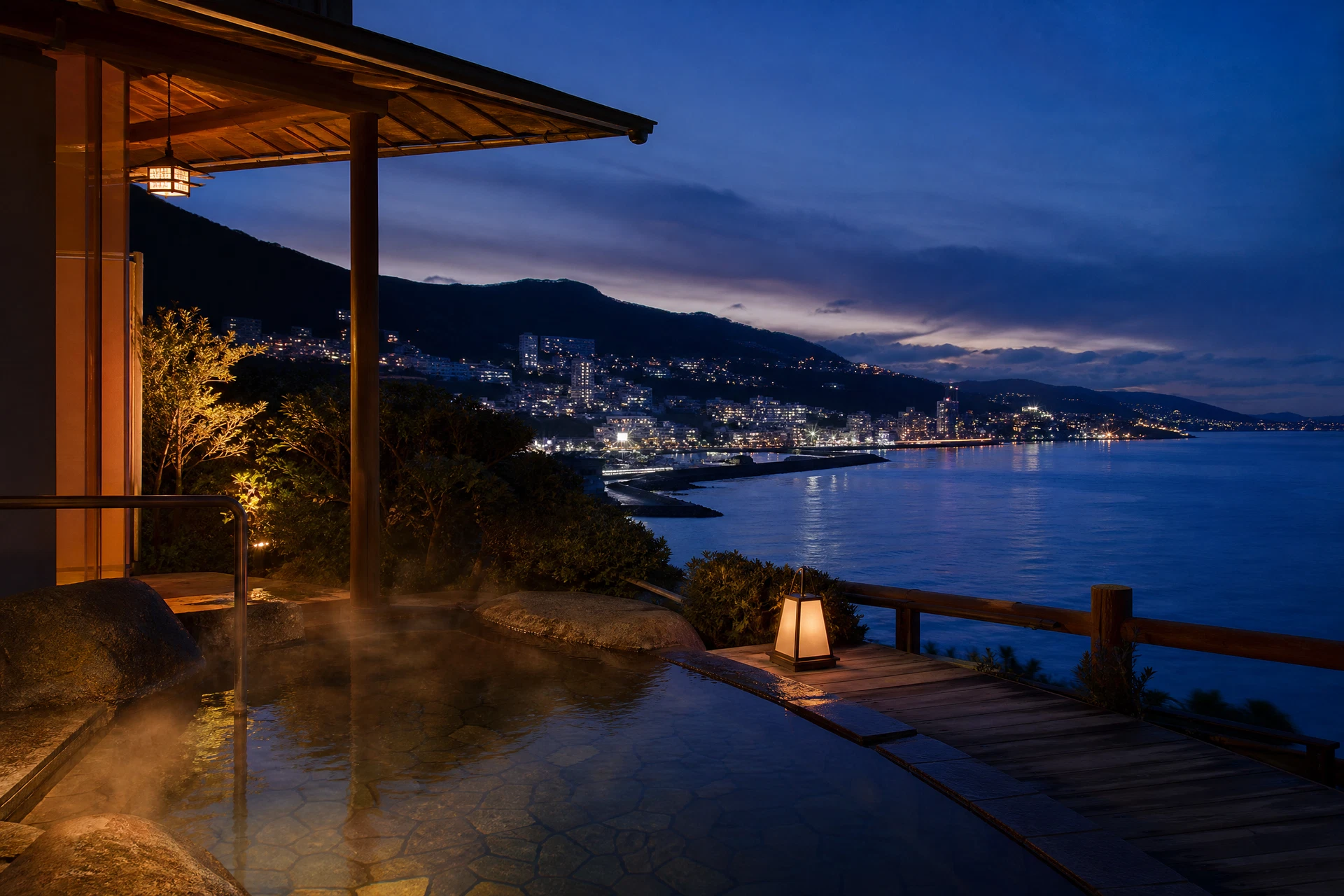
Aim to reach your ryokan in time to settle in before dinner. A Japanese inn changes the logic of the itinerary: the room, bath, meal, and evening light are not merely accommodation but part of the destination. If your property offers an open-air bath or a sea-facing setting, leaving a wide pause before dinner is often the best use of the first day.
4. Day 2: Kinomiya Shrine and MOA Museum of Art
Start the second day with Kinomiya Shrine, where the pace is intentionally quieter. The grounds are known for the sacred great camphor tree, described by Visit Atami as more than 2,100 years old, alongside shrine spaces, shaded paths, and a contemporary café setting [3]. From Atami Station, the shrine can be reached by a roughly 15–20 minute walk, local bus, or one stop on the JR Ito Line followed by a short walk [3].
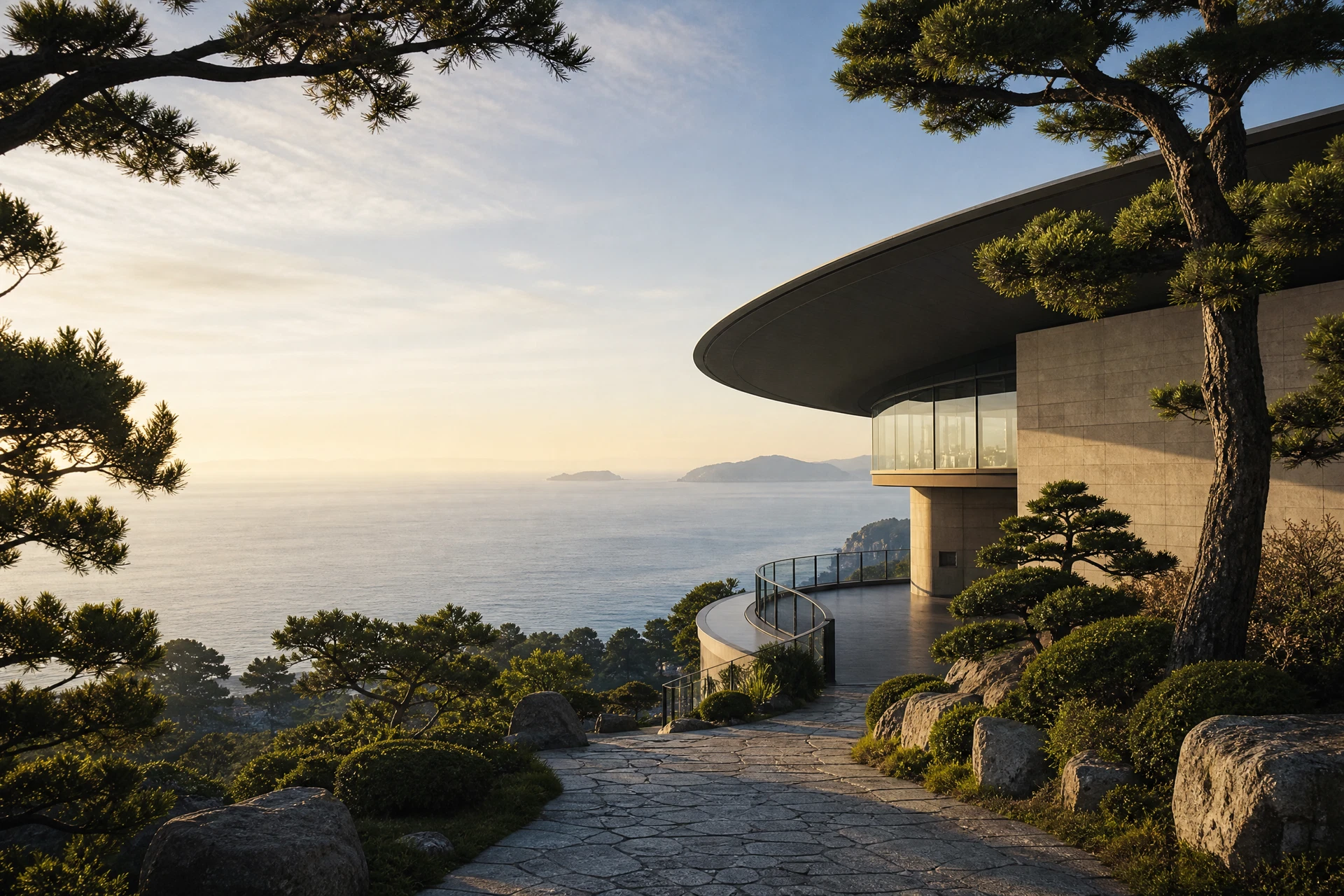
In the afternoon, shift from sacred landscape to visual culture at MOA Museum of Art. Its hilltop setting, exhibitions, ocean-view garden, restaurants, and tea-house spaces are substantial enough to shape a whole half day rather than a quick stop [4]. Check the current exhibition calendar and visitor guidance close to your trip, then leave a little time simply to look across the water. The contrast between old camphor tree and carefully framed sea view is one of the clearest reasons to stay overnight.
5. Day 3: A flexible coastal or cultural morning
Keep the final morning open on purpose. You may want a last breakfast and bath at the ryokan, a relaxed walk along the coast, a return to a favourite café, or a small cultural stop that did not fit comfortably on the day before. Atami also sits at the entrance to the wider Izu Peninsula, so a group with more time can use this morning as the beginning of a longer southbound journey rather than a direct return [2].
For a Tokyo return, plan the train or vehicle around the mood you want for the end of the stay. An early departure can bring you back for a Tokyo dinner; a later one gives the coast another full morning. This flexibility is exactly what the second night creates. It lets the final choice respond to your energy rather than a rigid timetable.
6. Getting around Atami with confidence
Atami is compact enough that a focused itinerary can combine walking, local buses, and short rail hops. The key is to group the town by area rather than zigzagging from coast to hilltop and back. Visit Atami's Kinomiya guide illustrates the choices clearly: walking from Atami Station is possible, while a local bus or the JR Ito Line makes the shrine more direct [3].
A private car is most useful when it reduces the friction between your stay and your interests: a ryokan above the town, a museum visit with luggage, a group that prefers fewer hills, or a route that continues into Izu. It is not about filling the schedule with more stops. It is about preserving the unhurried character that makes an overnight Atami stay worthwhile.
7. Seasons, accommodation, and practical planning
Atami changes with the calendar. The city's official travel guide combines onsen stays, gardens, seasonal flowers, fireworks information, and coastal scenery, so the best version of the trip depends on what you hope to experience [1]. Spring and autumn can be particularly appealing for outdoor paths and gardens; cooler or wetter days can make an onsen, museum, and inn-based plan feel especially well judged.
Reserve a ryokan or hotel early when your travel dates are fixed, especially if you care about a specific room type, meal plan, private bathing option, or sea view. Before departure, check the live pages for current train details, museum openings, seasonal events, and any weather-related changes. A well-planned Atami stay has a clear structure, but it should never depend on every element operating exactly as expected.
8. When a private charter changes the journey
Atami is a strong private-charter destination when you want an overnight stay to feel connected from the moment you leave Tokyo. Hotel pickup, luggage, sea-front arrival, hilltop cultural spaces, a ryokan check-in, and an Izu continuation can all sit within one plan. The car is not a substitute for the train; it is an alternative when the transfer points themselves would distract from the trip.
Tell us your Tokyo hotel, dates, preferred number of nights, group size, luggage, and the balance of onsen time, sea views, gardens, art, and walking that feels right. We can help shape a private Atami journey that keeps the coast calm, the logistics clear, and the final itinerary personal to your group.
9. Use live official information before you go
Before departure, check Visit Atami for current access, onsen, event, and destination guidance; read its Kinomiya Shrine guide for practical arrival options; and use the MOA Museum of Art website for current exhibitions and visitor guidance. Train conditions, museum hours, weather, special events, and accommodation availability should always be checked close to travel.
Atami multi-day consultation
Would you like an Atami stay designed around your pace?
Tell us when you are travelling, where you are staying in Tokyo, how many nights you have, your group size, luggage, and the balance of onsen time, coast, culture, and walking that feels right. We can help plan a private Atami journey with the flexibility that a multi-day stay deserves.
Plan a private Atami journey