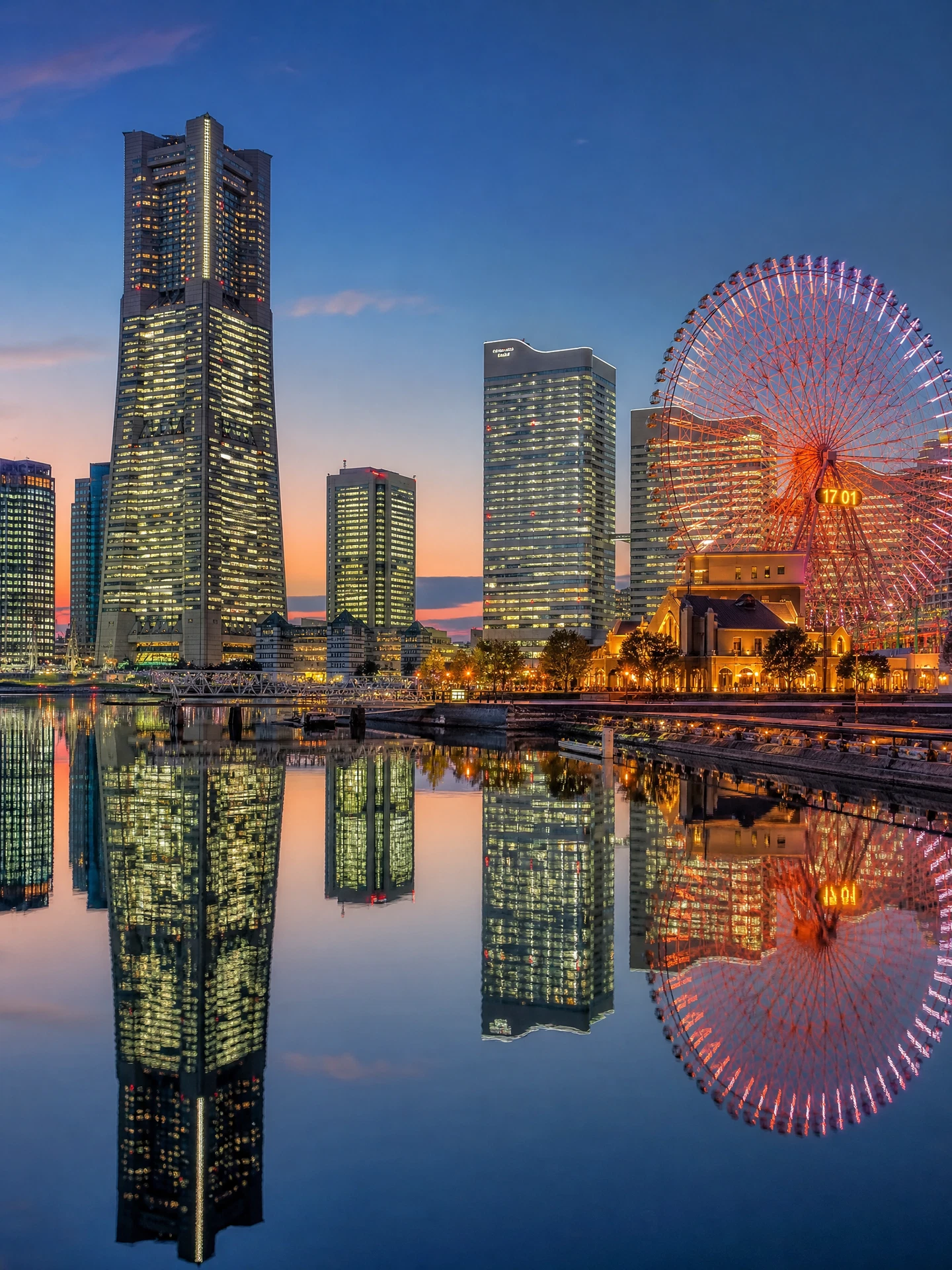
Yokohama is close enough to Tokyo to feel effortless, but open enough to make a day feel genuinely different. Its waterfront changes the scale of the city; its Chinatown asks you to follow appetite rather than an itinerary; and its gardens provide the quiet counterpoint that a satisfying day trip needs.
The strongest first visit does not attempt every neighbourhood. It links a few complementary experiences: a simple arrival, time by the harbour, one considered Chinatown meal, and a slower historical or garden stop. This guide is designed around that rhythm, with room to adjust for weather, a late lunch, or a view that deserves longer than planned.
For a change from harbour city pace, compare this route with the Tokyo to Kamakura day-trip guide and the Tokyo to Atami multi-day guide when choosing the character of time beyond Tokyo.
1. Why Yokohama makes such an easy day away from Tokyo
Yokohama offers a port-city perspective without asking you to commit to an overnight stay. The official visitor guide lists direct rail options from Tokyo Station in about 25 minutes, from Shinagawa in about 16–17 minutes, and from Shibuya in about 24–26 minutes, depending on the line [1].
That accessibility lets you choose your pace. A short trip can stay near Minato Mirai and Chinatown. A fuller day can add Yamashita Park, Motomachi, or Sankeien Garden. The aim is not to prove that you covered Yokohama; it is to create a sequence that feels generous enough to remember.
2. A route that gives each part of the city room
A balanced first itinerary begins around the harbour while the light is still clear, moves to Chinatown for a planned late lunch, and saves a garden or waterside walk for the afternoon. If you are coming by train, Yokohama Station is a practical arrival point; if you are travelling by private vehicle, the order can be shaped around your hotel, the weather, and whether Sankeien is a priority.
3. Getting from Tokyo to Yokohama
Rail is excellent when you are staying near Tokyo, Shinagawa, or Shibuya and want a straightforward city day. Choose a line based on your hotel rather than habit, and leave a small margin for station orientation and transfers. The official guide is the right place to check current route details close to your travel date [1].
A private charter becomes more valuable when you have young children, older relatives, several bags, a hotel pickup that is awkward by rail, or a wish to join Yokohama with another stop. It also gives the day a quieter beginning and end: no search for platforms at the hotel door, no need to force a garden visit into a fixed public-transport timetable, and no rush if lunch unfolds slowly.
4. The harbour: Minato Mirai, Yamashita Park, and perspective
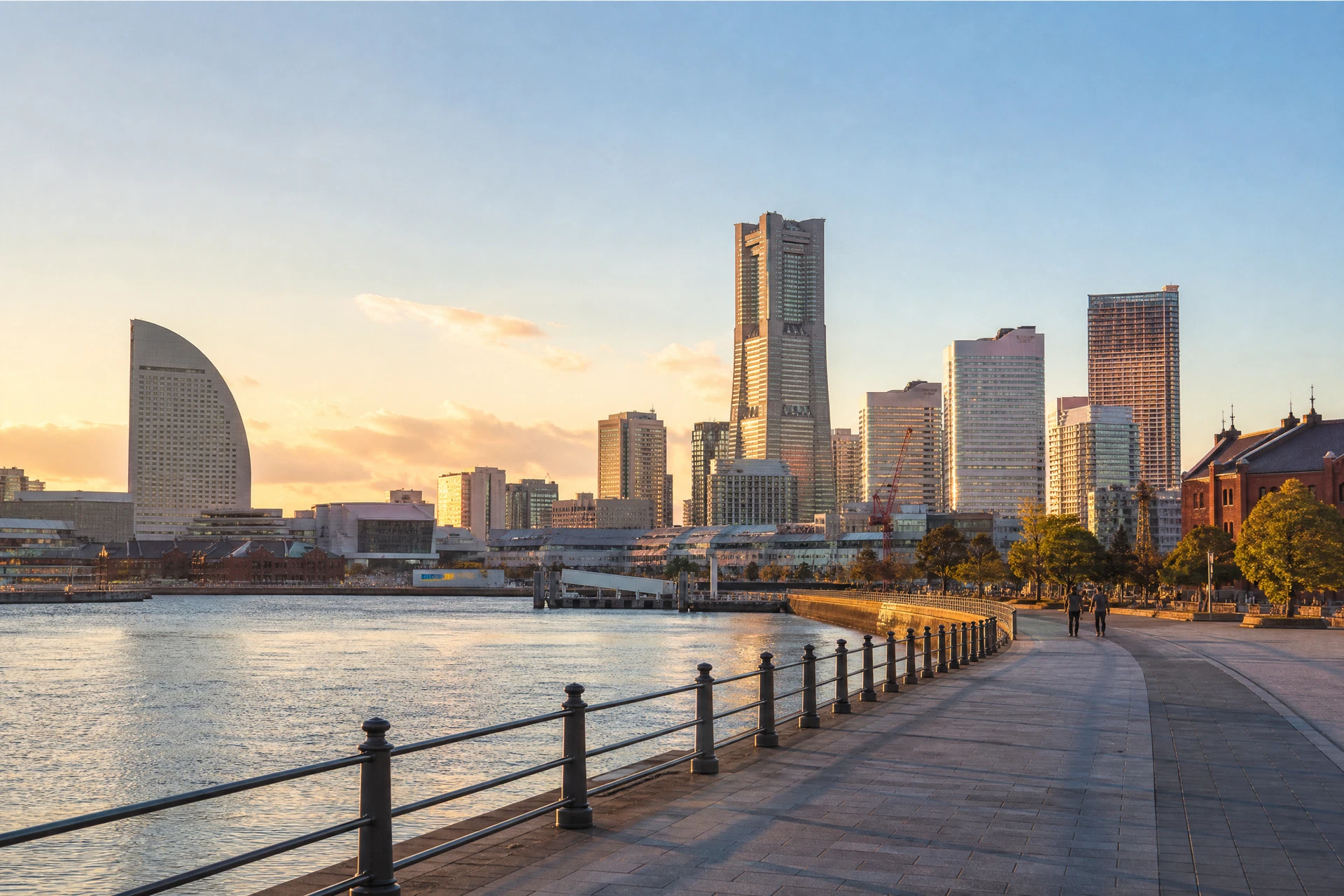
Begin with the waterfront rather than a shopping list. Minato Mirai gives the modern harbourfront its open skyline, while the approach around Yamashita Park and the port creates a more relaxed frame for walking. Let the weather decide how long you stay: bright mornings reward a slow promenade, and a cooler or overcast day may call for a shorter outdoor pause followed by an indoor museum or café.
The harbour is most useful as a transition, not a task. It resets your sense of scale after Tokyo and creates a natural connection between the station area, Chinatown, and the quieter historic districts beyond it.
5. Yokohama Chinatown: choose a meal, not a rush
Yokohama Chinatown is Japan's largest Chinatown, and JNTO notes its many shops and restaurants as well as convenient access from Ishikawacho or Motomachi-Chukagai stations [2]. That abundance is precisely why a plan helps. Decide in advance whether you want a seated meal, one signature snack, or a short walk through the gates and side streets, rather than trying to consume the entire district at once.
For a meaningful lunch, book or identify one restaurant that matches your group and dietary needs, then keep the rest of the visit light. The district works beautifully after a harbour walk, but it is often busiest when every visitor has the same lunchtime idea. An earlier lunch or later pause can make the experience calmer.
6. Sankeien Garden: a slower, historical finish
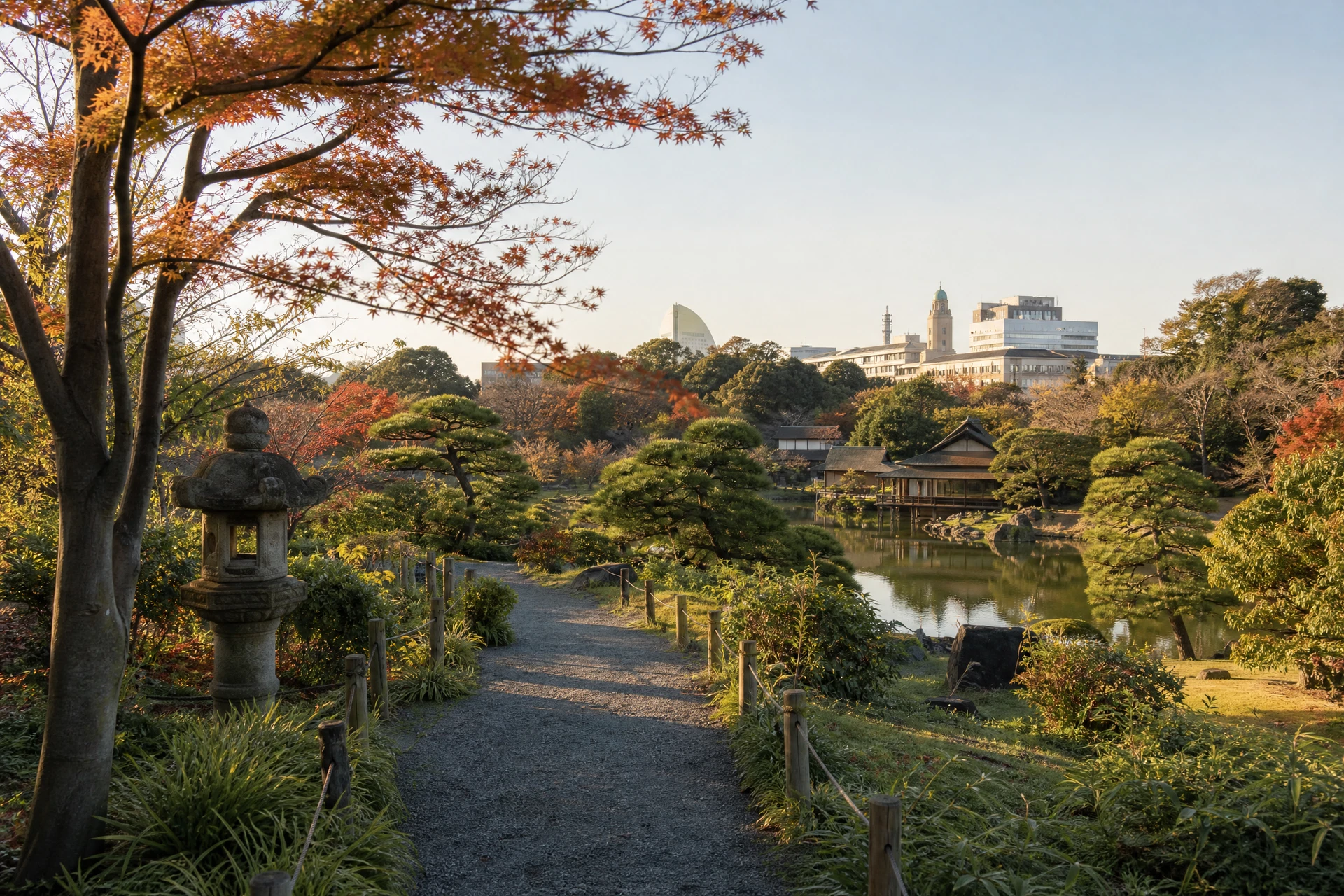
Sankeien Garden changes the mood of a Yokohama day. The official visitor guide describes a classical Japanese garden of more than 175,000 square metres, with historic buildings, seasonal landscapes, and a three-storey pagoda relocated from Kyoto [3].
It is the right choice when you want the day to end quietly, especially after the density of Chinatown. Give it real time rather than adding it as a rushed final photo stop. Seasonal colour, historic architecture, and the measured pace of the paths are the reason to come.
7. When a private charter makes the day easier
A private charter is particularly useful in Yokohama when you want to connect places that do not sit neatly on one rail line, adjust the day around a reserved lunch, or travel with people who value a door-to-door pace. It is not about moving faster at every moment; it is about keeping the transfers, hotel pickup, parking decisions, and route changes from taking attention away from the day itself.
Tell us where you are staying, how many people are travelling, whether Chinatown dining or Sankeien is a priority, how much walking feels comfortable, and any needs around luggage or child seats. We can recommend a vehicle and a route with enough room to feel personal.
8. Timing, crowds, and practical planning
Start early on weekends and public holidays, especially if Chinatown and the waterfront are both important. Yokohama's official visitor guide publishes current events and one-day itinerary ideas; use it close to your visit rather than relying on a fixed plan [4].
Wear comfortable shoes, carry a light layer for the waterfront, and protect a little time for the unexpected. Port weather, event traffic, restaurant queues, and seasonal garden conditions can all change the best order of the day. Leave one part of the itinerary flexible on purpose.
9. Use live official information before you go
Before departure, check the Yokohama official access guide for current transport details, JNTO's Chinatown guide for destination context, and Sankeien's official listing for visiting information. These are the right places to confirm timetables, opening details, events, and day-of conditions.
Yokohama day-trip consultation
Would you like a Yokohama day designed around your pace?
Share your Tokyo hotel, preferred departure time, party size, dining plans, walking comfort, and any places that matter to you. We can help plan a private Yokohama charter that brings together harbour views, Chinatown, gardens, and the time to enjoy them.
Plan a private Yokohama day trip