Kamakura is close enough to Tokyo to be easy, yet distinct enough to feel like you have crossed into another rhythm. The day can move from a shrine approach and old Zen precincts to an open-air bronze Buddha and the sea, with small lanes, seasonal flowers, and quiet pauses between them.
The best Kamakura day trip is not the one that attempts every landmark. It is the one that gives a few places enough time: a considered arrival, a temple or shrine that you can experience rather than photograph and leave, the Hase area around the Great Buddha, and a coastal finish if the weather and your energy invite it.
If you are comparing coastal and cultural escapes from Tokyo, continue with the Tokyo to Yokohama day-trip guide and the Tokyo to Chichibu multi-day guide before deciding how much time to spend beyond the city.
1. Why Kamakura works so well as a day trip
Kamakura was once Japan's political capital and remains a place where historical sites, Zen temples, beaches, and walking routes sit unusually close together. JNTO notes that it lies less than an hour south of Tokyo and highlights the Great Buddha, temples, Komachi-dori, and the coast among its essential experiences [1].
That combination makes it particularly good for a first day trip from Tokyo. You can use public transport and enjoy the compact centre, or choose a vehicle for a more flexible route when you are travelling with family, luggage, limited time, or a wish to connect Kamakura with another stop. Either way, leave enough space in the plan to absorb the day rather than only move through it.
2. A route that leaves room to enjoy the day
For most first visits, a calm sequence works better than a strict minute-by-minute itinerary: arrive near Kamakura Station, walk or browse briefly toward Tsurugaoka Hachimangu, continue to the Hase area for Hase-dera and Kotoku-in, then decide whether the day should end by the sea or return via a quiet café. This creates a natural arc from city energy to temple calm to coastline.
3. Getting from Tokyo to Kamakura
From Tokyo Station, the JR Yokosuka Line reaches Kamakura Station in about 55 minutes according to JNTO. Once in Kamakura, many central sights are walkable, while local rail and bus services make the Hase area and other pockets easier to reach [1].
A train day is an excellent choice when you are staying near a convenient line, travelling light, and comfortable with stations and local connections. A private charter becomes more appealing when your hotel is difficult to reach, your group has several bags, you are travelling with children or older relatives, or you want to set your own order around weather, walking comfort, and coastal stops.
4. Tsurugaoka Hachimangu: the quiet centre
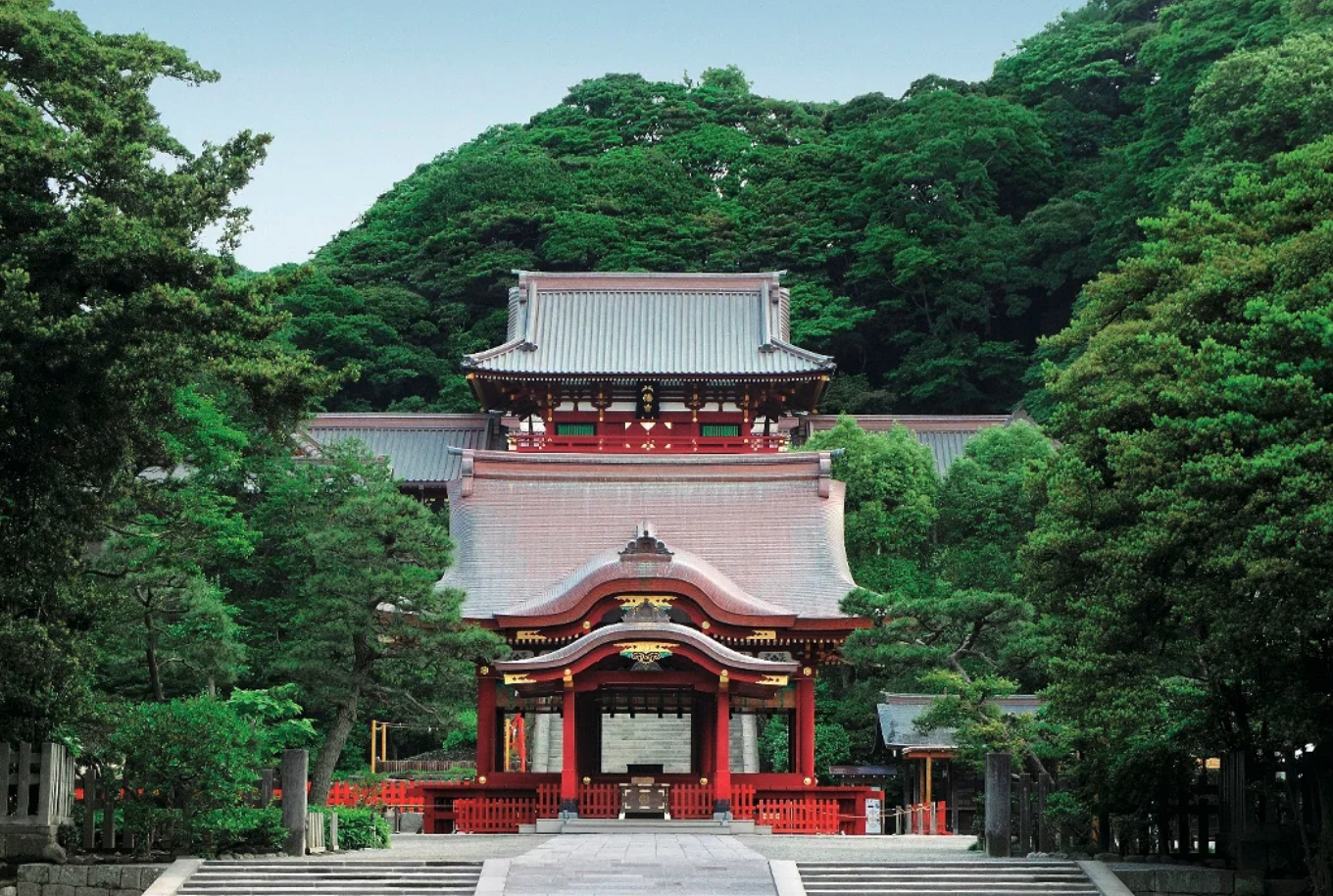
Tsurugaoka Hachimangu is a natural first anchor after arriving near Kamakura Station. Its approach, open grounds, and sense of arrival provide a measured contrast to the tighter commercial streets nearby. JNTO identifies the shrine as one of Kamakura's essential historical stops, alongside the city's temples, Great Buddha, and coast [1].
Give the visit more than a quick photo. Walk the approach at an unhurried pace, pause within the precincts, and use the shrine as the day's reset point before moving toward the livelier lanes or Hase. Starting here early is especially useful when you want a quieter first hour before the day's most popular areas become busy.
5. Komachi-dori: a thoughtful approach, not a checklist
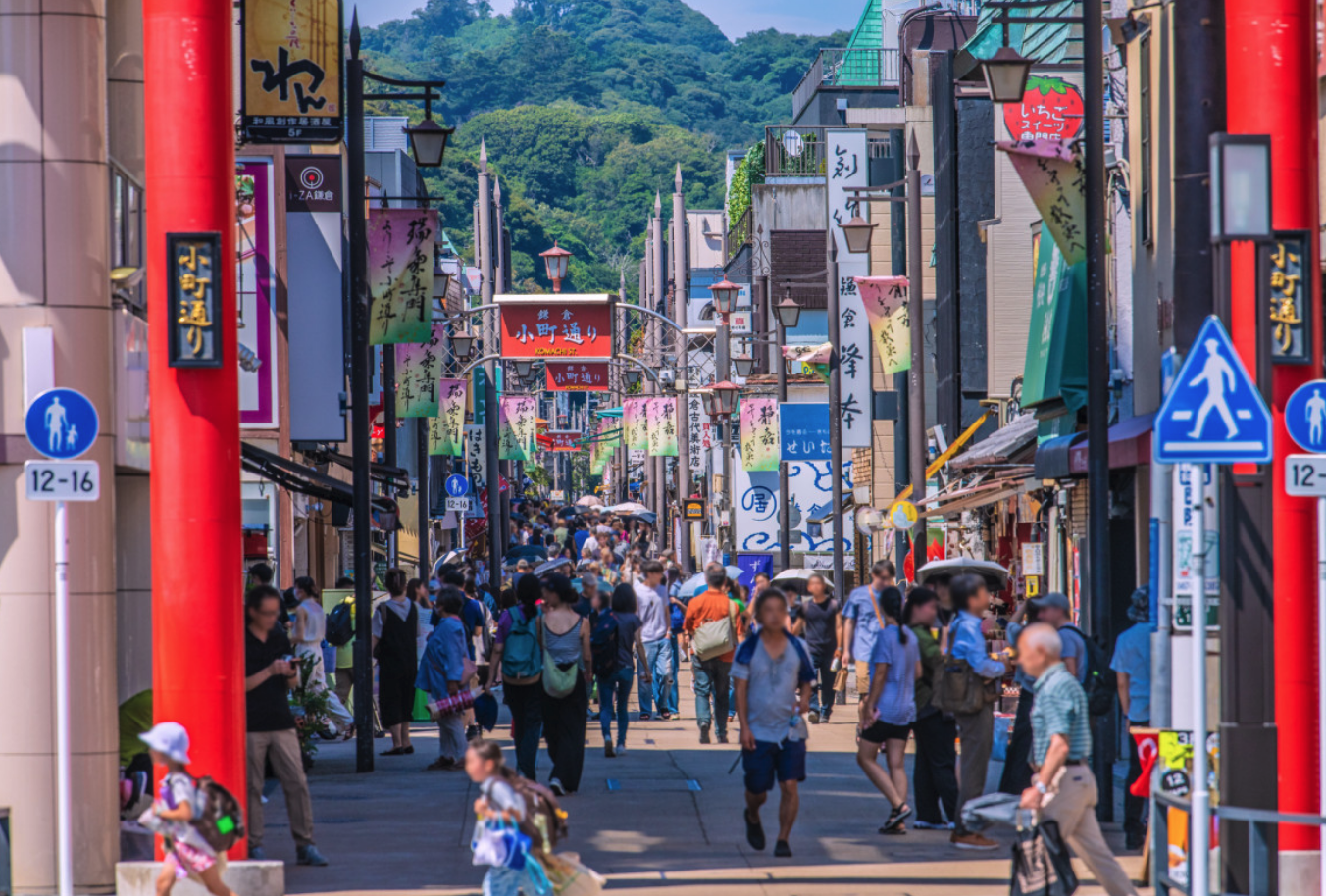
Komachi-dori is the energetic lane connecting the station area with the shrine approach. It is full of local sweets, small restaurants, gifts, and the changing pace of a real visitor town. It can also be the busiest part of the day. The most rewarding way to enjoy it is to choose one or two stops that genuinely interest you, rather than treating every storefront as a task.
Walk it on the way in if you arrive early, or save it for the return to the station when a snack or small gift feels natural. If crowds are heavy, take a parallel lane, step into a quieter café, or move on to the shrine first. The street works best as a transition between Kamakura's station rhythm and its historic core, not as a reason to compress the rest of the trip.
6. Hase, the Great Buddha, and temple time
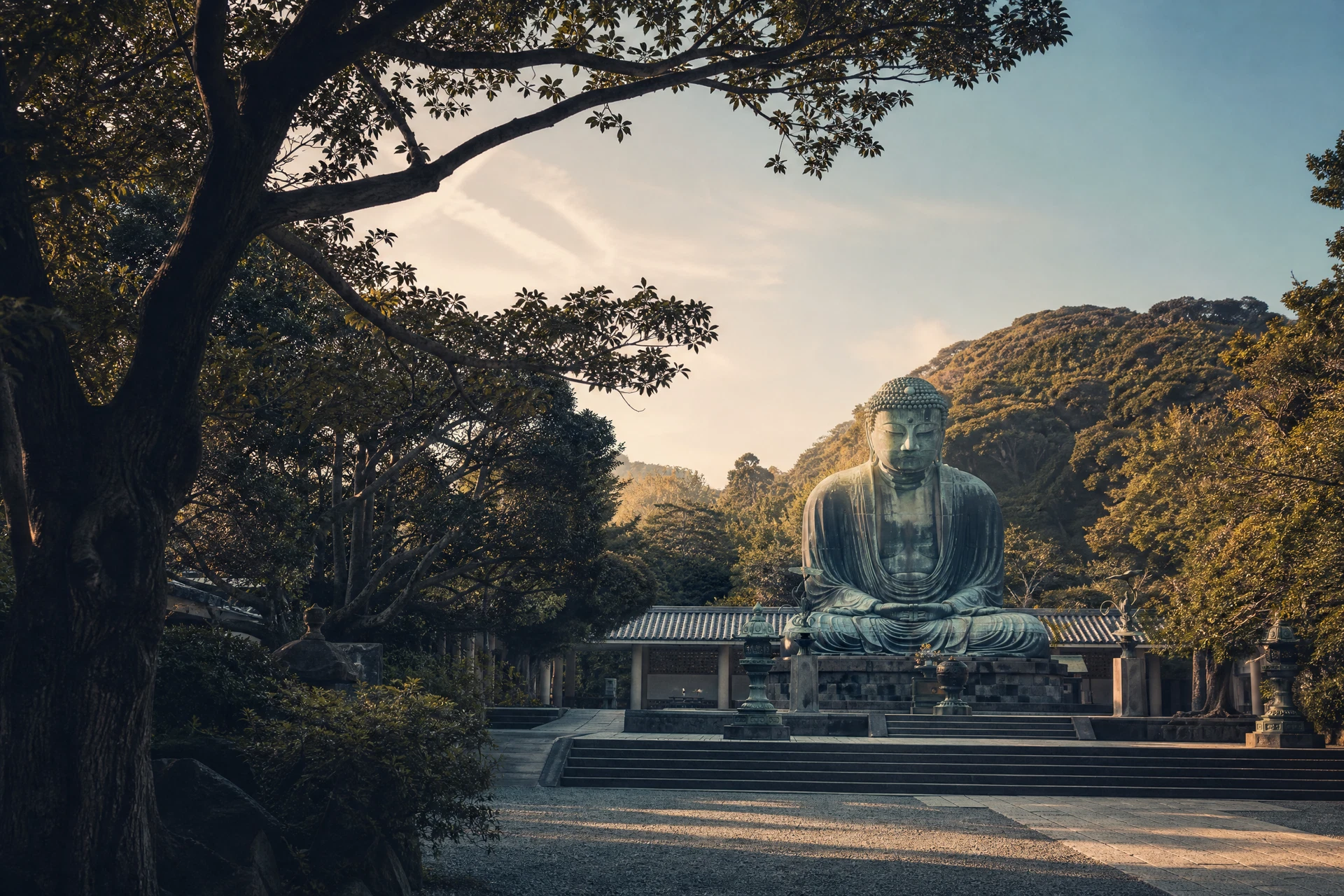
Kotoku-in enshrines the Kamakura Daibutsu, a colossal copper image of Amitabha Buddha whose open-air setting is unusual among Japan's large Buddha statues [2]. Arriving at the Great Buddha is a high point of the day, but it is worth making room for Hase-dera and the lanes around Hase rather than treating the statue as an isolated photo stop.
Kotoku-in's official guidance notes that Hase Station is reached on the Enoden from Kamakura, with a walk onward to the temple. It also publishes opening times, admission details, and visitor guidance, all of which should be checked before the day itself [2]. A mid-morning or early-afternoon Hase visit gives you room for both temple time and a coastal finish.
7. The coastline: Yuigahama and a slower afternoon
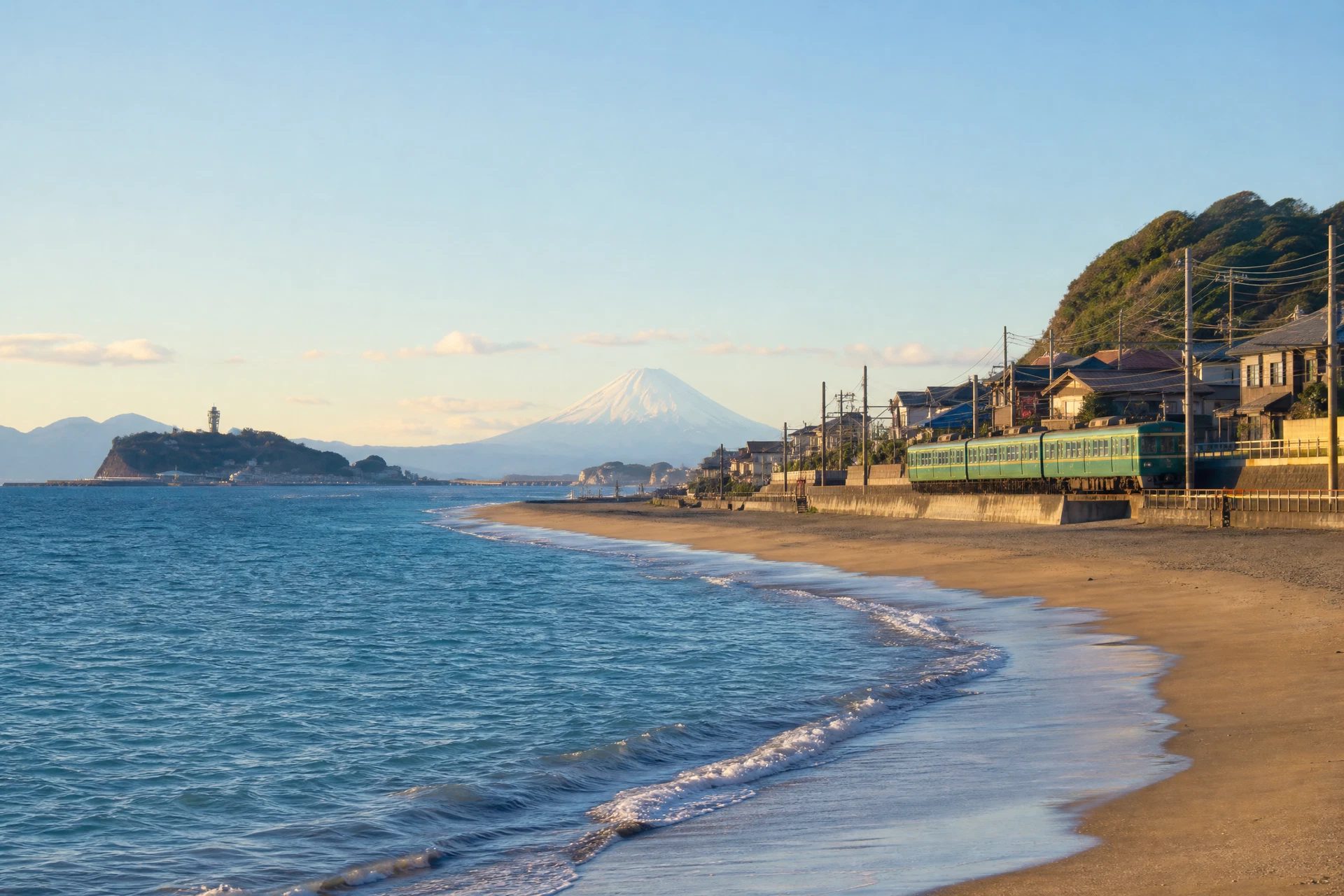
Kamakura's coastline is not an optional extra if the day is clear and you have energy left. Yuigahama offers a change of scale after the temple precincts: sea air, a long horizon, and the chance to let the day become less structured. JNTO identifies Kamakura's beaches and the nearby Enoshima area as part of the wider appeal of the destination [1].
This is a good place to adapt rather than force a plan. In summer, a beachside pause may be perfect; in cooler months, a short coastal walk and a warm drink can be enough. If the weather is poor, give the time back to Hase, a museum, or a more leisurely lunch.
8. When a private charter changes the day
A private charter is not about racing through Kamakura. It is about controlling the parts of the day that can become tiring: hotel pickup, luggage, changes between rail and walking, weather adjustments, a less direct coastal stop, or a return journey at the exact time your party is ready. It can also help create a route that combines Kamakura with Yokohama or another Tokyo-area stop when that is a better match for your stay.
Share your hotel, preferred departure time, party size, luggage, walking comfort, child-seat needs, and any places that matter to you. We can advise on a suitable vehicle and an itinerary with enough flexibility to feel like a day out, not a logistics exercise.
9. Timing, crowds, and practical planning
Start early on weekends, public holidays, and during popular seasonal periods. Kamakura's official tourism site provides model itineraries, access guidance, maps, live-camera links, and responsible-travel information; use it close to your visit rather than relying on a static plan [3].
Wear shoes suited to walking, keep a small buffer for queues and local transport, and resist the temptation to schedule every hour. Temple hours, trail conditions, events, traffic, and train services can change. A good plan has enough structure to be useful and enough margin to remain pleasant.
10. Use live official information before you go
Before departure, check Visit Kamakura for current access and visitor guidance, Kotoku-in for Great Buddha visiting details, and JNTO's Kamakura guide for destination context. These sources are the right place to confirm operating hours, routes, events, and day-of conditions.
Kamakura day-trip consultation
Would you like a Kamakura day designed around your pace?
Tell us where you are staying in Tokyo, how many people are travelling, what you most want to see, and how much walking feels right. We can help plan a private Kamakura charter with a thoughtful temple, Great Buddha, and coastline rhythm.
Plan a private Kamakura day trip